
Last Updated: October 25, 2026
Quick Summary
The best materials for comfortable everyday clothing are cotton for soft, easy-care versatility, linen for hot and humid days, and merino wool for cold weather and travel. Match the fiber to your climate and activity level rather than hunting for one perfect fabric.
- Cotton absorbs sweat well but dries slowly, so it can feel damp in humid heat.
- Linen is the coolest fabric on the list and dries noticeably faster than cotton.
- Merino wool uses fine fibers that wick moisture and resist odor for travel and layering.
- Silk, bamboo and TENCEL Lyocell feel softest but need gentler laundry care.
- Wash cotton cold or warm and tumble dry low to avoid shrinking.
Table of Contents
- What Makes Clothing Comfortable in the First Place?
- Quick Comparison: Comfort Criteria at a Glance
- Cotton, Linen, Wool, Silk and Bamboo: What Each Fiber Does Well
- Cotton vs Linen Clothing: Which One Should You Wear?
- The Best Fabric for Sensitive Skin
- Breathable Fabrics for Clothing: Airflow, Sweat and Temperature
- Easy-Care Fabrics for Everyday Clothes
- Matching Fabric to Climate, Season and Activity
- Frequently Asked Questions
What Makes Clothing Comfortable in the First Place?
Comfort in clothing comes down to four things working together: how the fabric feels against your skin, how well air moves through it, how it handles moisture, and how it holds up after repeated washing. Get those right and you stop thinking about what you're wearing. Get them wrong and no amount of styling fixes it.
At Dawterson, we focus on providing trend-driven pieces and thoughtful gifts that bring comfort and character to your daily life.
So before we compare fibers, let's define the terms. If you want to put that knowledge to use in a store, our guide on how to identify quality clothing fabrics walks through seven simple checks. Breathability is a fabric's ability to let air and body heat pass through it, which is why a loose linen weave feels cooler than a tight polyester knit. Moisture wicking is the way a fiber pulls sweat away from your skin so it can evaporate instead of sitting there.
Here's what most fabric guides get wrong: they rank materials as if one wins outright. Cotton isn't "better" than wool.
Below, we'll walk through what each fiber actually does well, where it falls short, and how to match it to your week.
Quick Comparison: Comfort Criteria at a Glance
Here's the short version before we get into the details. This table scores each fiber on the criteria that matter most for daily wear.
| Fiber | Breathability | Softness | Moisture Handling | Warmth | Care Ease |
|---|---|---|---|---|---|
| Cotton | Good | High | Absorbs well, dries slowly | Low | Easy |
| Linen | Excellent | Medium at first, softens over time | Absorbs and dries fast | Low | Moderate |
| Merino wool | Good | High (fine grades) | Wicks and resists odor | High | Moderate |
| Silk | Medium | Very high | Absorbs, delicate when wet | Medium | Delicate |
| Bamboo / TENCEL Lyocell | Good | Very high | Wicks well | Low to medium | Easy to moderate |
Use this as a starting point. The sections below explain the trade-offs behind each score.
Cotton, Linen, Wool, Silk and Bamboo: What Each Fiber Does Well
Every natural fiber has a personality. If lasting wear is a priority, our tips for finding durable everyday clothing that lasts can help you spot pieces that hold up. Understanding that personality is how you stop guessing in the dressing room.
Cotton: The Everyday Default
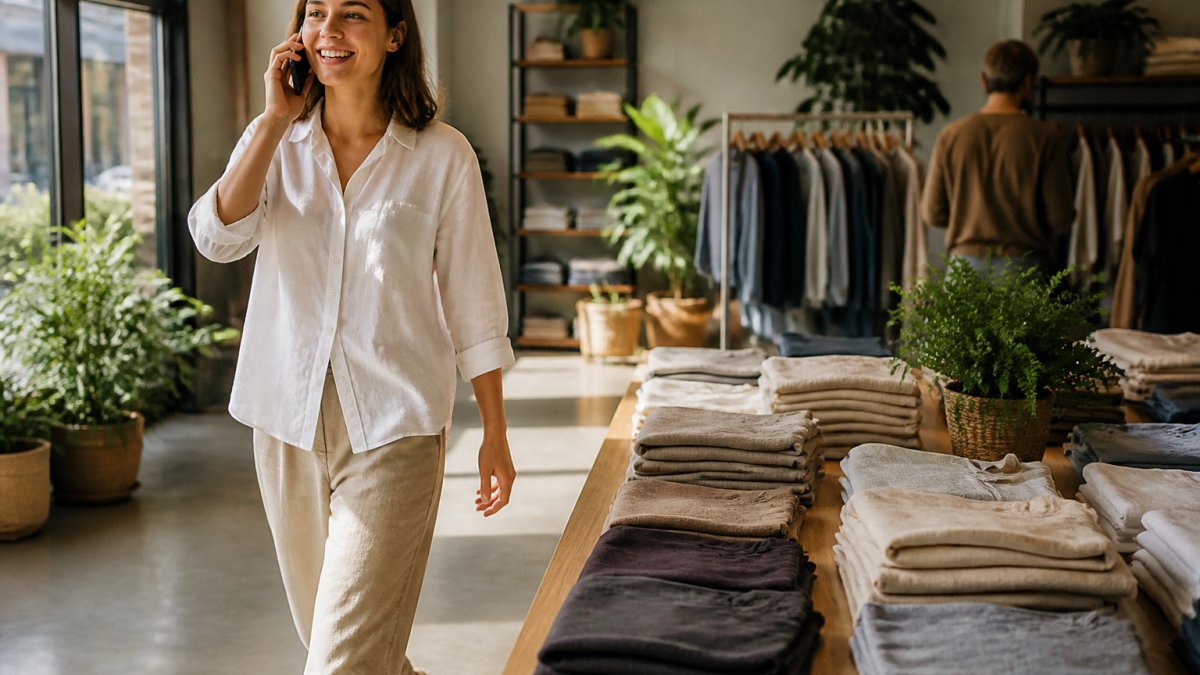
Cotton is the most forgiving fabric you can own. It's soft against skin, breathes reasonably well, and takes dye and washing without complaint.
The catch is moisture. Cotton absorbs sweat readily but holds onto it, which is why a cotton tee feels damp and heavy after a long walk in humid weather.
Best for: casual shirts, underwear, tees, year-round basics. Skip if: you're doing high-sweat activity or spending the day in serious heat.
Linen: Built for Heat and Airflow
Linen is the coolest fabric on this list, and it's not close.
The trade-off is texture. New linen feels crisp, almost stiff, and it wrinkles the moment you sit down. Most people either love that lived-in look or hate it.
Best for: hot weather, humid climates, summer shirts and dresses. Skip if: you want a pressed, polished look all day.
Wool and Merino Wool: Warmth Without the Itch
Wool has a reputation problem leftover from scratchy sweaters. Merino wool fixes it.
Merino also regulates temperature well. It traps warmth in cold weather but wicks moisture and resists odor, so it stays comfortable through a long day. That combination makes it a strong pick for travel and cold-weather wear.
Best for: cold weather, travel, socks, layering. Skip if: you run hot and want maximum airflow.
Silk, Bamboo and TENCEL Lyocell: Softness and Drape
If skin feel is your priority, this group wins. Silk has a smooth, cool hand and beautiful drape.
These fibers are less durable and less forgiving in the wash. Silk needs delicate handling, and bamboo knits can stretch out of shape. Treat them as a treat for your wardrobe rather than the workhorse.
Best for: sensitive skin, sleepwear, dressier everyday pieces. Skip if: you want zero-fuss laundry.
Cotton vs Linen Clothing: Which One Should You Wear?
Choose cotton for everyday versatility and easy care, and choose linen for hot, humid days when airflow matters most. Cotton is softer out of the gate; linen is cooler and dries faster.
Think of it as a climate decision more than a style one. In mild weather, cotton is the practical default. In a heat wave, linen earns its wrinkles.
A few practical differences worth knowing:
Cozy Merino Wool Hiking Socks – 5 Pair Set →
- Softness: Cotton wins on day one. Linen catches up after several washes.
- Wrinkles: Cotton wrinkles some. Linen wrinkles proudly.
- Drying speed: Linen dries noticeably faster, which matters when you're sweaty.
For a wardrobe that works across seasons, many people keep both: cotton for the everyday rotation, linen for the hottest weeks. Our capsule guide to everyday essentials for women shows which pieces to build around.
The Best Fabric for Sensitive Skin
The best fabric for sensitive skin is one that stays smooth, breathes, and avoids the three things that actually trigger irritation: friction, trapped moisture, and chemical residue. Fine merino, silk, bamboo, and TENCEL Lyocell top most lists, with soft cotton close behind, but the fiber name is only half the story.
Here's what most guides skip. Irritation usually comes from construction and finish, not the fiber itself. A rough seam, a stiff collar, a tag, or a heavy wrinkle-resistant treatment can bother skin more than a coarser natural fiber ever would.
What actually causes the irritation
- Friction: coarse fibers, raised seams, tight elastic, and scratchy labels rub the same spot all day.
- Trapped moisture: sweat that can't escape softens skin and makes chafing worse, which is why breathability matters as much as softness.
- Residue: dyes, sizing, and finishes left in new garments are a common culprit, especially in darker, saturated colors.
A common mistake is assuming "natural" always means gentle. It doesn't. New linen can feel crisp and abrasive until it softens, and some wool is scratchy no matter how it's marketed. What matters is the grade of the fiber, how it's spun, and how the garment is finished.
A practical way to test a fabric
Before committing to a full wardrobe change, try a single piece against the most sensitive area, usually the inner arm, waistband, or neck. Wear it for a normal day, not five minutes in a dressing room.
A few habits that help:
- Wash new garments before the first wear to rinse out excess dye and sizing.
- Choose lighter colors if you tend to react to dyes.
- Look for smooth flat seams or seamless construction where fabric rubs.
If you're unsure where to start, a soft cotton or bamboo base layer is the gentlest entry point. Test how your skin responds for a week before adding more.
Breathable Fabrics for Clothing: Airflow, Sweat and Temperature
Breathable fabrics let heat and moisture escape so your body can regulate temperature naturally.
Here's the part most people miss: the weave matters as much as the fiber. A loose, open weave breathes better than a tight one, even in the same material.
For sweat management, the goal is to move moisture away from skin so it can evaporate. Merino and synthetic blends excel here because they wick rather than hold.
For active days, a fabric that wicks makes a real difference. Our breathable mesh sports socks use zoned ventilation panels to let heat escape, and the merino blend in our hiking socks handles moisture while keeping feet warm.


Easy-Care Fabrics for Everyday Clothes
The easiest fabrics to care for are cotton, cotton blends, and TENCEL Lyocell, all of which tolerate machine washing and regular tumble drying.
For most people, laundry effort is the hidden factor in comfortable everyday clothing. Our boutique fabric care guide covers how to keep these fabrics comfortable wash after wash.
A simple care cheat sheet:
- Cotton: machine wash cold or warm, tumble dry low.
- Linen: machine wash cool, remove promptly, iron while slightly damp.
- Merino wool: wash cold on a gentle cycle or by hand, lay flat to dry.
For a deeper walkthrough, you can explore our rotating rooms to find useful items that are as practical as they are delightful.
Watch out: hot water and high heat are the two fastest ways to shrink cotton and pill merino. When in doubt, go cooler than you think you need.
Matching Fabric to Climate, Season and Activity
Match fabric to your environment first, then to your activity. That order matters: a merino base layer is brilliant on a cold commute and miserable on a humid afternoon walk, and linen is the reverse. The goal isn't one perfect fiber, it's the right fiber for each part of your day.
Start with your climate
- Hot and humid: linen, lightweight cotton, and bamboo move air and release moisture fastest. Loose weaves beat tight ones in the same fiber.
- Cold and dry: merino wool and heavier cotton trap warmth while wicking, so you stay warm without feeling damp.
- Mild and transitional: cotton, silk, and TENCEL Lyocell handle shifting temperatures without overcommitting to warmth or airflow.
Then layer in your activity
Comfort changes with how much you move. Sitting at a desk, walking the dog, and a lunchtime workout put very different demands on a fabric.
- Low activity (desk, lounging): softness and drape matter most; cotton, silk, and bamboo feel best against skin.
- Moderate activity (commuting, errands, long days): breathability and moisture handling take over; lightweight cotton, linen, and merino blends keep you from feeling clammy.
- High activity (exercise, hot days on your feet): wicking fibers, merino and technical blends, move sweat away instead of holding it.
The blend and construction angle
Most everyday clothing isn't a single fiber, and that's usually a good thing. A cotton-poly blend wrinkles less and dries faster than pure cotton; a merino-nylon blend holds its shape better than pure merino. Knit versus woven matters too: knits stretch and move with you, wovens hold structure and drape. Fabric weight is the third lever, a lightweight version of the same fiber breathes more than a heavy one.
A simple weekly framework
- Hot and humid week: linen shirts, lightweight cotton tees, bamboo underwear.
- Cold snap: merino base layers, heavier cotton, wool blends.
- Mixed transitional days: cotton and TENCEL Lyocell you can layer up or down.
If your days mix sitting, walking, and light workouts, look for stretch and moisture handling rather than a single "perfect" fiber. For more help planning those days, see our guide on how to choose comfortable everyday active wear. Our breathable mesh sports socks and merino hiking socks show how fiber choice plays out in the pieces you wear most.
The real difference between a wardrobe that works and one that doesn't comes down to matching fiber to use. Buy for your actual week, not an imaginary one.
Frequently Asked Questions
Which material is best for daily use?
Cotton is the most practical daily pick for most people because it is soft, breathable and easy to wash. For hot, humid days, linen moves air better. For cold weather, merino wool keeps you warm without bulk. Many comfortable everyday clothing wardrobes mix all three rather than relying on one fiber. Think about your climate and how much care you want to do, then choose the fabric that fits that routine.
Is cotton or linen more comfortable for everyday clothing?
It depends on the weather and the fit. Cotton is softer against the skin and holds its shape well through repeated washing, which makes it a reliable pick for shirts, underwear and daily wear. Linen is lighter and lets air move through more freely, so it feels better in hot, humid conditions, but it wrinkles easily. In the cotton vs linen clothing decision, choose cotton for softness and easy care, linen for heat.
What is the best fabric for sensitive skin?
Look for smooth, breathable natural fibers with minimal finishing. Cotton, silk and TENCEL Lyocell tend to feel gentle because they sit smoothly against the skin and absorb moisture. Merino wool is also an option for many people because its fine fibers feel softer than standard wool. Wash new garments before wearing them, choose looser fits, and avoid tight elastic or rough seams where irritation tends to start.
Which fabrics are breathable and easy to care for?
Cotton and cotton-rich blends are the easiest combination of breathable and low-maintenance. Most can go straight into a cold machine wash and a low tumble dry. Linen is breathable but wrinkles, so it usually needs ironing or a relaxed attitude toward creases. Synthetic performance knits dry fast and need little attention. For breathable fabrics for clothing that also survive frequent washing, cotton blends are hard to beat.
What fabric blends are best for comfortable everyday wear?
Blends combine the strengths of two fibers. Cotton with a small amount of spandex stretches and keeps its shape, which helps in socks and activewear. Wool blended with polyester stays warm but dries faster and holds up to wear. Nylon adds durability and a smooth hand to yoga pants and tops. Read the label: a blend with a high natural-fiber percentage usually feels better against the skin than one dominated by synthetic fiber.
