
Table of Contents
- Start With the Fiber Label: How to Read Clothing Fabric Labels
- How to Check Fabric Quality by Touch, Weave, and Construction
- Durable Clothing Fabrics: What Holds Up to Real Wear
- How to Check Fabric Quality Online Before You Buy
- Match the Fabric to the Garment and the Season
- Care, Shrinkage, and Colorfastness: The Tests That Predict Longevity
- Quality Clothing Fabrics vs. Price: What You're Actually Paying For
- Conclusion: Build a Wardrobe You Can Trust
- Frequently Asked Questions
Last Updated: October 13, 2026
Start With the Fiber Label: How to Read Clothing Fabric Labels
Learning how to identify quality clothing fabrics starts with one small step: reading the label before you fall in love with the color. The fiber content tag tells you what a garment is actually made of, and it rarely lies.
Fiber content lists the materials in a fabric, printed from the largest amount to the smallest. That order matters more than any marketing phrase on the hangtag.
Why Fiber Order on the Label Matters
The first fiber listed makes up the biggest share. If a tag reads "60% cotton, 40% polyester," you are mostly buying cotton. Flip that order and you are mostly buying polyester.
Here is what the top spot usually tells you:
- Cotton first: soft, breathable, easy to wash
- Polyester first: durable, wrinkle-resistant, less breathable
- Wool first: warm, insulating, needs gentle care
A quick note on blends: a small amount of spandex or elastane adds stretch and helps a garment keep its shape.
What Blended Fabrics Tell You
Blends are not a warning sign. They are a design choice, and often a smart one. Cotton mixed with a little polyester resists wrinkles and holds up longer, and wool blended with nylon wears better at heels and elbows. The trick is knowing why the blend exists: if the second or third fiber adds stretch, durability, or softness, that is a good blend.
How to Check Fabric Quality by Touch, Weave, and Construction
You can judge a lot about a fabric in under a minute, just by handling it. Run the fabric between your fingers: quality fabric feels dense and consistent, with no thin spots or loose threads.
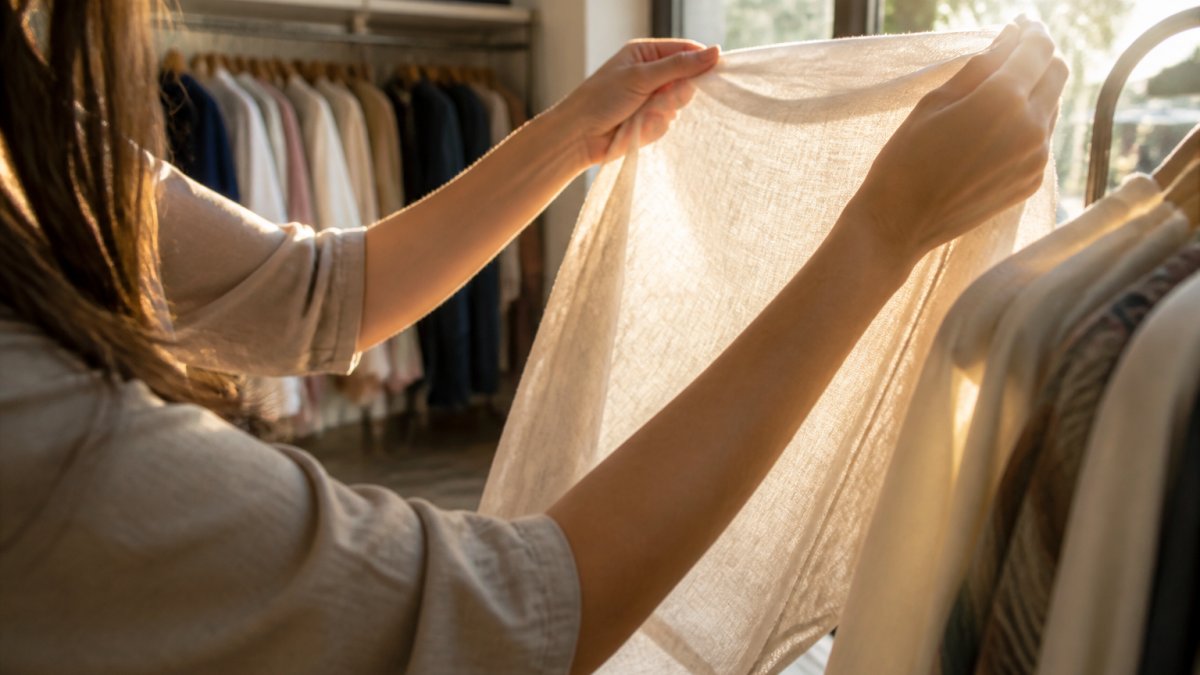
The Light Test and Other Quick In-Store Checks
Hold the garment up to a window or bright light. This simple light test shows you the fabric weight and opacity in seconds.
- See-through in daylight? The fabric is thin and may wear out fast
- Even coverage with no thin patches? Better density and durability
- Loose, open weave? More breathable, but more prone to snags
Then check the seams: tug gently and look for stray threads or gaps. Run your thumb over the fabric to feel for pilling (those little fuzz balls) before it ever happens. A tight, even weave usually means a longer-lasting garment.
Stretch, Recovery, and Hand Feel
Stretch recovery is how well a fabric springs back after you pull it. Grab a section, stretch it, then let go: good fabric returns to its original shape, while poor fabric stays baggy. Hand feel is simply how the fabric feels against your skin. Quality fabric feels smooth or pleasantly firm, not scratchy or flimsy. If a knit feels thin and limp in your hands, it will likely feel the same after a few washes.
Durable Clothing Fabrics: What Holds Up to Real Wear
The most durable clothing fabrics share three traits: tight construction, quality fibers, and smart blends. Durability is not about thickness alone. It is about how the fibers, weave, and finish work together.
Here is how common fibers compare for everyday wear:
| Fiber | Strength | Breathability | Care Needs | Best For |
|---|---|---|---|---|
| Cotton | Good | High | Easy | Everyday tees, jeans |
| Linen | Medium | Very high | Medium | Summer wear |
| Wool | Good | Medium | Gentle | Sweaters, socks |
| Silk | Medium | Medium | Delicate | Dressy pieces |
| Polyester | High | Low | Easy | Activewear, outerwear |
| Nylon | Very high | Low | Easy | Jackets, bags |
Natural fibers like cotton, linen, and wool breathe well and age gracefully, while synthetics like polyester and nylon resist wear and dry fast. The best garments often mix both.
If you want a real-world example of durable construction, look at how a good pair of socks is built. Our Cozy Merino Wool Hiking Socks blend merino wool with polyester, spandex, and nylon.

How to Check Fabric Quality Online Before You Buy
Shopping online makes fabric inspection harder, but not impossible. You just need a repeatable checklist instead of a gut feeling.
The Listing Checklist
Work through these in order. If a listing fails two or more, move on.
- Exact fiber percentages. A trustworthy listing says "95% cotton, 5% spandex," not "premium cotton blend." Vague fiber language is the single biggest red flag online.
- Fabric weight or thickness in plain terms. Look for words like "midweight," "heavyweight," or a grams-per-square-meter (GSM) figure. GSM measures fabric density, a lightweight tee sits around 140-160 GSM, a sturdy one closer to 200-220 GSM, and heavy sweatshirt fleece runs higher. A listing that gives a number is a good sign the seller knows the product.
- Care instructions up front. If the seller hides washing guidance, they may be hiding shrinkage risk.
Reading Reviews for Fabric Clues
Reviews are where fabric truth shows up after a few washes. Search for these words:
- "shrunk" or "shrank"
- "pilled" or "fuzzy"
- "thin" or "see-through"
One unhappy review is noise. Five mentioning the same problem is a pattern. Pay special attention to reviews from shoppers who mention how many times they have washed the item, those are the most useful.
Judging Seller Claims
Be skeptical of words that sound like quality but say nothing: "luxury blend," "premium fabric," "designer feel." A seller who is proud of their fabric will tell you the fiber, the weight, and the construction. If they only tell you how it feels, they may be hoping you will not ask what it is made of.
We also offer 30-day no-hassle returns, which takes some of the risk out of buying fabric you cannot touch first.
Cozy Merino Wool Hiking Socks – 5 Pair Set →
Match the Fabric to the Garment and the Season
The right fabric depends on what you are making and when you will wear it. Think about intended use first:
- Everyday tees: soft cotton or cotton blends that wash well
- Activewear: polyester and nylon blends that wick moisture
- Winter layers: wool, fleece, and dense knits for warmth
Season matters too. Breathable fabrics like linen and cotton keep you cool in heat, while wool and fleece trap warmth when temperatures drop. For cold-weather gear, look for fabrics that balance insulation with durability. Our Men's ArcticGuard Fleece-Lined Utility Set pairs a fleece lining with a utility exterior, giving you warmth and practical pockets for cold days.

Care, Shrinkage, and Colorfastness: The Tests That Predict Longevity
How a fabric handles washing predicts how long it will last. Shrinkage and color loss are the two biggest reasons clothes get retired early. Instead of guessing, run a few simple tests at home.
The Shrinkage Test
- Pick one item from a new set and measure it flat before washing, note the length from shoulder to hem and the width across the chest.
- Wash it alone in cold water on a gentle cycle, then air dry it.
- Measure again and compare.
Most natural fibers like cotton and linen shrink a little even in cold water, and more in hot. If an item shrinks noticeably in cold water, it will shrink badly in warm, treat it gently from then on. Knits tend to shrink more than wovens because of their looped structure.
The Colorfastness Test
Before you wash a new dark or brightly dyed item with anything else, do this:
- Find a hidden spot, like an inside seam allowance.
- Rub it firmly with a damp white cloth or paper towel.
- If dye transfers to the cloth, that item will bleed. Wash it alone or with similar dark colors for the first few washes.
This is especially worth doing with deep reds, indigos, and blacks, which are the most likely to bleed.
The Pilling Check
Pilling happens when short fibers work loose and tangle into little balls. After a few washes, check the high-friction zones: underarms, cuffs, collars, and where a bag strap rubs. If pills form there, the fabric is shedding fibers and will look worn faster. Longer-staple fibers and tighter knits resist pilling better.
Reading the Care Label Like a Pro
The care label is a set of instructions the manufacturer tested against. Follow it and you protect the fabric. A few rules of thumb:
- Cold water and low heat slow shrinkage and fading for almost every fabric.
- Turn knits and dark colors inside out before washing to reduce friction and pilling.
- Air dry when you can. Dryer heat is the fastest way to shrink natural fibers.
Following care instructions protects your investment and keeps colors and shapes intact far longer.
Quality Clothing Fabrics vs. Price: What You're Actually Paying For
A higher price does not always mean better fabric, and a low price does not always mean poor quality.
Here is how to think about value:
- Fiber cost: Natural fibers like wool and silk usually cost more than synthetics
- Construction: Reinforced seams and quality finishing add cost
- Brand markup: You may pay extra for a label, not the fabric
The smart move is to judge the fabric, not the price tag. A mid-priced cotton shirt with tight construction often outlasts a trendy piece at twice the cost.
| What You See | What It Usually Means | What To Do |
|---|---|---|
| Vague fiber label | Hidden cheap materials | Skip it |
| Tight, even weave | Better durability | Worth buying |
| See-through fabric | Thin, fast to wear out | Check the light test |
| Reinforced seams | Longer garment life | Favor these pieces |
| Mostly synthetic at a high price | Paying for the name | Compare fiber content |
This matters most for basics you wear often. Our AeroStep Breathable Sports Socks use a polyester, nylon, and spandex blend with mesh panels for airflow, a good example of matching fiber to function.

Conclusion: Build a Wardrobe You Can Trust
Learning how to identify quality clothing fabrics takes a little practice, but the payoff lasts for years. Read the fiber label, run the light test, check the seams, and trust the reviews.
We curate everyday finds with practical details in mind, from breathable socks to warm cold-weather sets, and we back them with 30-day no-hassle returns and free shipping on orders $50+.
Frequently Asked Questions
How can you tell if clothing fabric is good quality?
Start with the fiber label, then use your senses. Quality clothing fabrics feel dense and smooth rather than thin or scratchy, hold their shape when you stretch a small section, and don't let much light through when held up. Check the weave for tight, even construction and look at seams and hems for clean finishing. A fabric that passes these quick checks is more likely to resist pilling and keep its color after washing.
Which fabrics are most durable for everyday clothing?
Durable clothing fabrics usually combine a strong natural fiber with a small amount of synthetic for stretch and shape retention. Cotton-polyester blends, wool blends, and tightly woven cotton all hold up well to regular wear and washing. Look for a higher fiber percentage of the strong material listed first on the label, and check that the fabric feels firm rather than flimsy. Proper care, like following the wash instructions, extends durability further.
How can you tell if fabric will pill?
Pilling happens when short fibers work loose and ball up on the surface. To spot a likely piller, rub the fabric briskly between your fingers and see if loose fibers or fuzz appear. Loosely knit or loosely woven fabrics with lots of short staple fibers pill more easily than tight, smooth constructions. Blends with a high percentage of short cotton fibers and low twist yarns are common culprits, so check the label and feel for a smooth, firm surface.
How do you check fabric quality when shopping online?
When you can't touch the fabric, lean on the details. Zoom into product photos to check weave tightness and seam finishing, read the full fiber content and care instructions, and scan customer reviews for mentions of shrinkage, pilling, or color fading. Look for brands that list fabric weight or construction details, and favor shops with easy returns so you can inspect the garment in person. We offer 30-day no-hassle returns.