
Table of Contents
- Quick Comparison: Everyday Essentials at a Glance
- Capsule Wardrobe Essentials 2026: What's Changed This Year
- How to Build a Capsule Wardrobe That Actually Works
- Best Quality Basics for Women: Tops, Denim, and Trousers
- Everyday Accessories and Footwear That Do the Work
- Budget-Conscious vs. Investment Tiers: Where to Spend
- Body-Type Styling and Climate Considerations
- Conclusion: Your 2026 Wardrobe Foundation
- Frequently Asked Questions
Last Updated: September 18, 2026
Quick Comparison: Everyday Essentials at a Glance
Building a wardrobe of everyday essentials for women in 2026 starts with a short list, not a long one. The best everyday essentials for women 2026 are the pieces you reach for without thinking: a crisp button-down, dark wash jeans, tailored trousers, a structured blazer, quality tees, a trench coat, versatile shoes, and neutral knitwear.
| Essential | Best For | Tier | Rotation |
|---|---|---|---|
| White button-down | Work and weekend | Investment | 2-3x weekly |
| Dark wash straight-leg denim | Everyday wear | Mid-range | 3-4x weekly |
| Tailored trousers | Office and events | Investment | 2x weekly |
| Structured blazer | Layering | Investment | 1-2x weekly |
| Quality white tees | Base layer | Budget | Daily |
| Trench coat | Transitional weather | Investment | Seasonal |
| Ballet flats, sneakers, boots | Footwear rotation | Mixed | Daily |
| Neutral knitwear | Layering | Mid-range | 3x weekly |
Capsule Wardrobe Essentials 2026: What's Changed This Year
Capsule wardrobe essentials 2026 look different from five years ago. Comfort fabrics now lead, and neutral palettes have replaced the trend-driven color stories that defined earlier capsule advice.
The 2026 Shift: Comfort Fabrics and Neutral Palettes
That constraint sounds limiting. In practice, it removes decision fatigue from your mornings entirely.
How to Build a Capsule Wardrobe That Actually Works
A capsule wardrobe is a small, coordinated collection of clothing that mixes and matches to cover most occasions with fewer pieces. The goal is versatility, not deprivation.
The 3-3-3 Rule and Wardrobe Rotation
The 3-3-3 rule keeps building simple: choose three tops, three bottoms, and three pairs of shoes that all coordinate. That's 27 possible outfits from nine items.
- Pick 3 tops in your neutral palette
- Pick 3 bottoms that match every top
- Pick 3 shoes for different occasions
- Photograph each combination you like
- Track what you actually wear for two weeks
- Remove anything you skipped
Best Quality Basics for Women: Tops, Denim, and Trousers
The best quality basics for women share three traits you can verify in the fitting room: fabric weight you can feel, seams that lie flat against the skin, and a fit that survives repeated washing. Price is a weaker signal than most shoppers assume, a $40 tee with a dense knit outlasts a $120 tee with a thin one.
The White Button-Down
Look for a fabric weight between 3.5 and 4.5 ounces per square yard for year-round wear; anything lighter wrinkles the moment you sit down, anything heavier reads as a jacket. Check the placket, the reinforced strip behind the buttons, for a double layer of fabric. Single-layer plackets gap and pucker after a few washes.
Dark Wash Straight-Leg Denim
Denim weight is measured in ounces per square yard. Most everyday straight-leg denim sits between 10 and 13 ounces. Below 10 ounces feels flimsy and bags at the knee within a season; above 14 ounces is stiff workwear territory that takes months to break in.
Tailored Trousers
Fabric content matters more here than anywhere else. A wool blend with 2-5% stretch holds a crease and drapes cleanly; 100% polyester shines under office lighting and pills at the inner thigh. Look for a lined waistband, it prevents the waist from rolling, and a hook-and-bar closure rather than a single button, which distributes tension better.
The Structured Blazer
A blazer earns its investment tier through construction, not label. Look for a canvas front (you can feel a floating layer between the outer fabric and the lining when you pinch the chest) rather than a fused front, which bubbles after dry cleaning. A defined shoulder, either a light pad or a roped sleevehead, is what makes a plain outfit read intentional.
Quality White Tees
Treat tees as consumables, not investments. Buy them in multiples at a budget tier, replace them yearly, and judge them on three things: fabric weight (5-6 ounces per square yard holds shape), a ribbed neckline with a bound edge rather than a raw one, and side seams (tubular tees twist in the wash).
Fabric Care and Longevity Tips
Wash less often than you think. Most knits and denim survive longer with airing between wears and cold-water washing. Turn denim inside out, skip the dryer, and hang trousers by the hem to keep their shape. Use mesh laundry bags for tees to prevent the neckline from stretching against other garments in the drum.
Everyday Accessories and Footwear That Do the Work
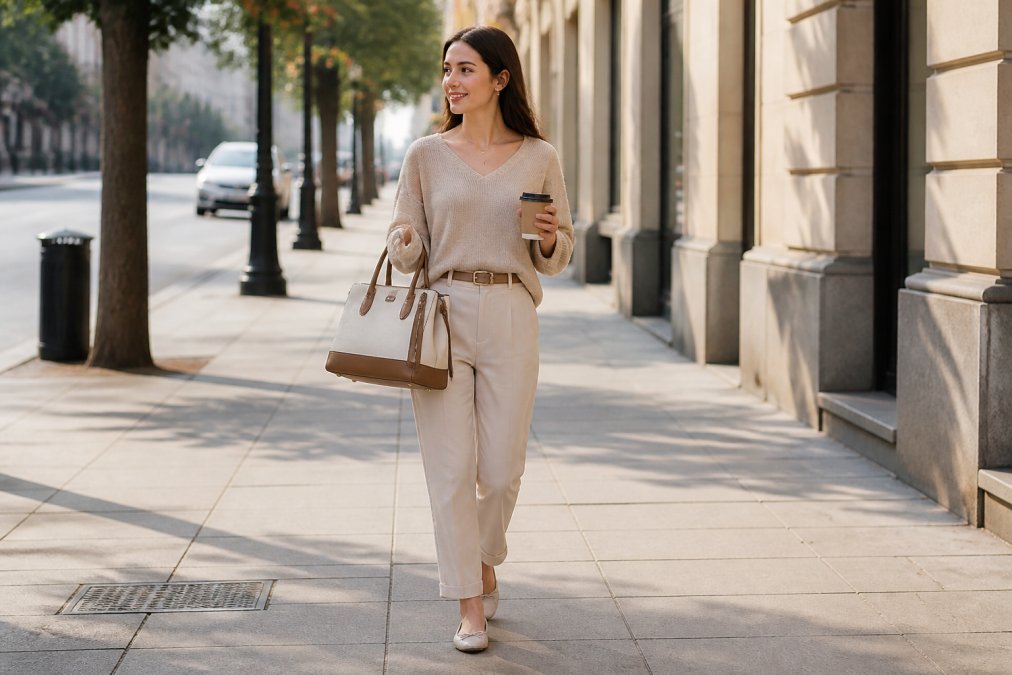
Accessories and footwear carry more weight in a capsule than most people expect. One structured bag and three shoe styles can cover nearly every day of the week.
Modern Two-Tone Commuter Satchel →
Budget-Conscious vs. Investment Tiers: Where to Spend
Most guides mix price points randomly, which makes it hard to plan a budget. This section categorizes every essential into a tier so you can decide where to spend before you shop, a gap the top-ranking listicles consistently miss.
Investment Tier: Outerwear, Blazers, Trousers, Bags
These pieces define how an outfit reads, and they're worn constantly. They also benefit most from construction you can feel, canvas fronts, lined waistbands, reinforced plackets, which is exactly what budget manufacturing skips.
- Outerwear and trench coats: A trench with a water-resistant cotton gabardine shell and a removable liner covers three seasons. Look for storm flaps and a back vent, both of which signal a garment built to last.
- Blazers: A canvas-front blazer holds its shape through years of dry cleaning. A fused blazer bubbles within a season.
- Trousers: Wool-blend trousers with a lined waistband and a hem allowance outlast polyester alternatives by a wide margin.
- Bags: A structured leather or coated-canvas satchel with reinforced stitching at the handle attachment points is the single highest cost-per-wear accessory in most wardrobes.
Mid-Range Tier: Denim and Knitwear
Fit and fabric matter here, but replacement is expected. Denim fades and stretches; knitwear pills and loses shape. Buy mid-range, replace every two to three years, and don't over-invest.
- Denim: 10-13 ounce dark wash straight-leg, 1-2% stretch.
- Knitwear: Merino or cotton blends hold up better than acrylic, which pills quickly. Look for a tight knit gauge, you shouldn't see light through the fabric when held up.
Budget Tier: Tees, Socks, and Basics
These wear out on a schedule. Buy them in multiples, replace them yearly, and treat them as consumables. Spending more here rarely extends life proportionally.
- White tees: 5-6 ounce cotton, ribbed neckline, side seams.
- Socks: Buy in multi-packs. Look for a cushioned footbed and breathable mesh paneling if you walk or commute.
- Undergarments and layering pieces: Replace on a schedule, not on a whim.
A Practical Budget Split
A workable starting point for most wardrobes is roughly half the clothing budget on the investment tier, a third on mid-range, and the remainder on basics. Adjust based on what you actually wear, if you live in denim, shift weight to mid-range; if you're in a blazer five days a week, shift to investment.
The Save-vs-Splurge Decision Rule
When you're unsure which tier a piece belongs in, ask: How often will I wear this, and how hard is it to replace? High frequency plus hard to replace equals investment. High frequency plus easy to replace equals budget. Low frequency equals borrow, rent, or skip.
Body-Type Styling and Climate Considerations
Fit beats fashion every time. The same capsule adapts to different body types through proportion, not new purchases.
Conclusion: Your 2026 Wardrobe Foundation
The hard part isn't choosing pieces. It's resisting the urge to buy more of them.
Frequently Asked Questions
What are the essential clothes for a woman in 2026?
A white button-down shirt, straight-leg dark wash jeans, tailored black trousers, a structured blazer, quality white t-shirts, a trench coat, neutral knitwear, and versatile footwear like ballet flats or clean sneakers. These pieces form a capsule wardrobe that mixes and matches easily. Focus on neutral colors like black, white, beige, and navy so everything works together. Add a crossbody bag or satchel for everyday carry. The goal is fewer pieces that you actually wear, not a closet full of options you ignore.
What is the 3-3-3 rule for clothes?
The 3-3-3 rule is a capsule wardrobe guideline: three tops, three bottoms, and three pairs of shoes that can create at least nine different outfits. It forces you to pick pieces that genuinely work together. Start with neutral colors and classic silhouettes so every combination looks intentional. This approach simplifies getting dressed and reduces decision fatigue. It also helps you identify gaps in your wardrobe before buying more. Once you master the 3-3-3, expand gradually with layering pieces and accessories.
How do I build a capsule wardrobe for 2026?
Start by auditing what you already own and removing anything you haven't worn in a year. Identify your core neutral palette, then fill gaps with quality basics: a crisp button-down, straight-leg denim, tailored trousers, and a structured blazer. Add layering pieces like neutral knitwear and a trench coat. Choose footwear that handles a 10,000-step day. Rotate your wardrobe seasonally to keep it fresh. The capsule wardrobe essentials for 2026 lean toward comfort fabrics and timeless pieces that work across seasons.
What will be trending for women in 2026?
Neutral palettes, relaxed tailoring, and elevated basics dominate 2026. Straight-leg denim replaces skinny fits, and structured blazers are being styled with everything from yoga pants to tailored trousers. Sustainable fashion continues to influence buying decisions, with shoppers favoring investment pieces over fast fashion. Footwear trends toward comfortable options like ballet flats and clean sneakers built for all-day wear. Layering remains central, with cardigans and trench coats serving as transitional staples. The overall direction is effortless style that prioritizes versatility over novelty.
How do I choose quality basics that last?
Check fabric content first. Natural fibers like cotton and wool hold up better than synthetic blends over time. Look for reinforced seams, especially at stress points like shoulders and pockets. For denim, a small percentage of stretch helps shape retention without sacrificing durability. Wash cold and air dry when possible to extend garment life. A 5-pack of performance socks with reinforced heel and toe seams is a small example of how construction details matter. Buy fewer pieces and care for them properly.