
Table of Contents
- Start With the Care Label: Reading Fabric Care Labels
- How to Wash Delicate Boutique Clothing Without Damage
- The Best Laundry Tools for Luxury Fabrics
- How to Remove Stains From Boutique Materials
- Drying and Ironing: Heat, Light, and Fiber Integrity
- How to Store Boutique Fabrics to Maintain Them Long-Term
- Mending, Pilling, and Preventative Care That Pays Off
- Frequently Asked Questions
Last Updated: September 25, 2026
Start With the Care Label: Reading Fabric Care Labels
Learning how to maintain boutique fabrics starts with one small tag. Fabric care labels tell you exactly how to wash, dry, and iron a garment so it keeps its shape and color. So read it first, every time.
Here's what the symbols mean:
- Washtub with a number: maximum water temperature in Celsius
- Hand in a tub: hand wash only
- Circle: dry clean only
- Triangle with an X: do not bleach
- Iron with one dot: low heat
How to Wash Delicate Boutique Clothing Without Damage
The safest way to wash delicate boutique clothing is cold water, mild detergent, and very little agitation. Heat and friction cause most damage. Cold water protects color and reduces shrinkage.
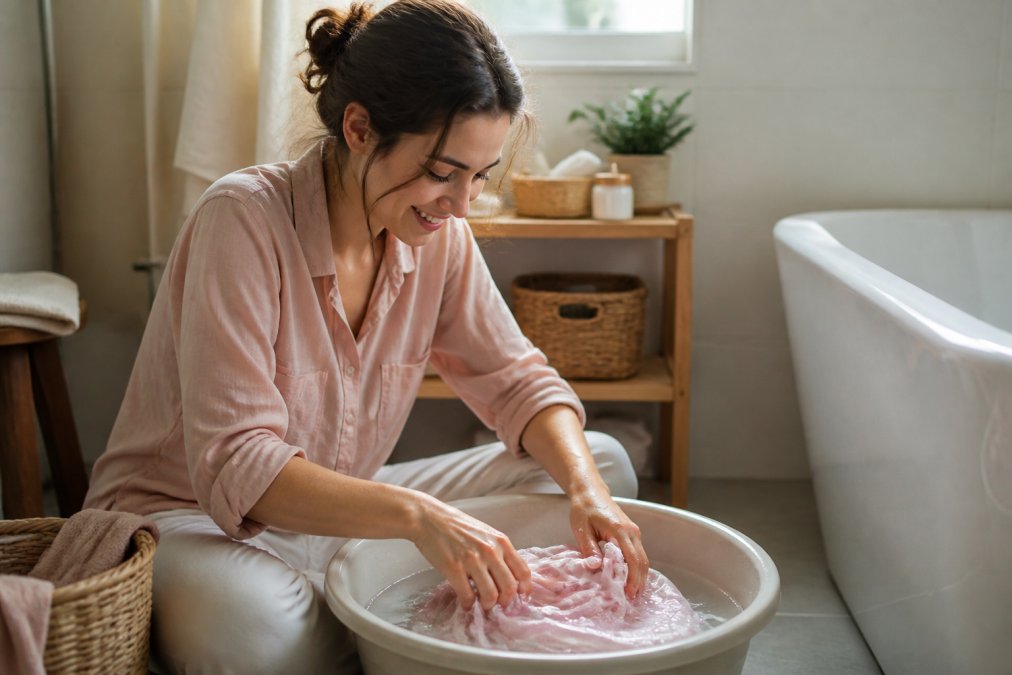
Hand Washing vs. the Gentle Cycle
Hand washing gives you the most control. Fill a basin with cool water, add a capful of mild detergent, and swirl gently for a few minutes. Never wring or twist. Press water out with a clean towel instead.
| Method | Best For | Water Temp | Agitation |
|---|---|---|---|
| Hand wash | Silk, wool, lace, beading | Cool | Minimal |
| Gentle cycle | Cotton blends, synthetics | Cold | Low |
| Dry clean | Structured jackets, lined pieces | N/A | None |
The Best Laundry Tools for Luxury Fabrics
The right tools make delicate care simple. You don't need much, but a few basics protect fiber integrity and prevent pilling.
- Mesh laundry bags: keep straps and lace from snagging
- Mild, pH-neutral detergent: gentler than standard formulas
- A clean towel: for blotting water without wringing
- A drying rack: for air-dry without heat
- Padded hangers: stop shoulder creases in knits
How to Remove Stains From Boutique Materials
Removing stains from boutique materials comes down to speed, a gentle touch, and knowing how your specific fiber reacts. Blot the stain with a clean cloth right away. Rubbing pushes it deeper into the weave and can pill the surface.
Why Fiber Type Changes Everything
Most stain guides treat all fabrics the same. They aren't. Here's how the fibers you're most likely to own respond to common household treatments:
- Silk: A protein fiber. Harsh alkalis (like ammonia or strong dish soap) can dull the sheen and break down the fiber over time. Stick to pH-neutral detergent and cool water. Never use enzyme-based cleaners, enzymes digest protein, and silk is protein.
- Wool: Also protein-based. Same rules as silk: no enzymes, no bleach, no hot water. Wool also felts with agitation, so blot, don't rub.
- Rayon and viscose: A regenerated cellulose fiber that loses strength when wet. Handle gently, don't wring, and never leave it soaking. Vinegar is generally safe but test first, some rayon dyes bleed.
- Linen: A sturdy cellulose fiber that tolerates more heat and mild acids than silk or wool. It can handle a diluted vinegar solution well, but repeated bleach exposure weakens the fiber.
- Cotton: The most forgiving of the group. Most mild treatments are fine, but hot water still sets protein stains.
- Synthetics (polyester, nylon): Oils cling to these fibers more than naturals. A drop of mild dish soap works well, but keep heat low, synthetics can melt or glaze under a hot iron.
Stain-by-Stain Cheat Sheet
| Stain | First Move | Treatment | Avoid On |
|---|---|---|---|
| Oil or grease | Blot, don't rub | Drop of mild dish soap, rinse cool | Silk (use pH-neutral instead) |
| Coffee or tea | Blot immediately | Cool water + mild detergent | Wool (agitation causes felting) |
| Red wine | Blot, cover with salt if fresh | Cool water + mild detergent | Rayon (test dye first) |
| Deodorant | Sponge, don't scrub | Diluted white vinegar | Silk (vinegar can dull sheen) |
| Ink | Blot with cotton swab | Rubbing alcohol, spot test first | Rayon, some synthetics |
| Blood, egg, dairy | Cold water only | Mild detergent, cool rinse | Never hot water on any fiber |
The Rules That Apply to Every Fiber
- Test on a hidden seam first. Dyes react differently even within the same fabric type.
- Work from the outside in. This stops the stain from spreading.
- Use cold water on protein stains. Heat sets blood, egg, and dairy permanently into the fiber.
- Skip bleach and fabric softener. Bleach breaks down fibers; softener coats them and traps odors.
- Know when to stop. If a stain won't budge after two gentle attempts, a professional dry cleaner is the safer call, especially on silk, wool, or anything lined.
Drying and Ironing: Heat, Light, and Fiber Integrity
Air-drying protects fiber integrity better than any machine. Heat breaks down elastic and causes shrinkage. Lay knits flat to dry so they keep their shape, and hang woven pieces on a padded hanger.
For ironing, match the temperature to the fabric:
- Silk and wool: low heat, press cloth between iron and fabric
- Cotton and linen: medium to high heat, slightly damp
- Synthetics: low heat, or skip ironing entirely
How to Store Boutique Fabrics to Maintain Them Long-Term
Storing boutique fabrics well means controlling three things: moisture, light, and weight. Get those right and a garment can sit for months and come out looking like it went in. Get them wrong and you'll find mildew spots, yellowing, or stretched shoulders that no amount of steaming will fix.
Seasonal Rotation: The Step Most People Skip
Before anything goes into long-term storage, it needs to be clean. Even invisible body oils and deodorant residue oxidize over time and leave yellow or brown stains that only show up months later. Wash or dry clean first, then store.
Here's a simple seasonal rotation to consider:
- End of season: Wash or dry clean everything you're putting away. Let it fully dry, even a little dampness invites mildew.
- Sort by fiber: Knits, silks, and wools go in breathable bags. Structured pieces go on padded hangers. Denim and heavy cotton can fold.
- Add protection: Cedar blocks or lavender sachets deter moths. Refresh them every few months, the scent fades long before the wood stops working.
- Label and store: Note what's inside each bag. Next season you'll thank yourself.
- Mid-season check: Pull bags out once, air them for an hour, and look for any signs of pests or moisture.
What to Store In (and What to Avoid)
| Material | Good For | Why |
|---|---|---|
| Cotton garment bags | Most garments | Breathable, keeps dust off |
| Acid-free tissue paper | Silks, fine knits, folded pieces | Prevents acid transfer and crease lines |
| Cedar blocks or lavender sachets | Wool, cashmere, silk | Natural pest deterrent |
| Plastic bins or vacuum bags | Short-term only | Trap moisture, cause yellowing over time |
| Wire hangers | Nothing delicate | Leave shoulder marks and can rust |
Plastic bins feel protective, but they seal in whatever moisture is already in the fabric. If you must use them, line with acid-free tissue and check every few months.
Rolling vs. Folding vs. Hanging
Rolling works best for knits, silk scarves, and anything prone to crease lines. Folding is fine for structured pieces and denim. Never hang heavy knits, the weight stretches shoulders and the garment never quite recovers.
| Storage Method | Best For | Avoid |
|---|---|---|
| Rolling | Knits, scarves, silk | Stiff, structured pieces |
| Folding | Denim, jackets, tees | Heavy knits on shelves |
| Hanging | Woven dresses, blouses | Stretchy knits |
Mending, Pilling, and Preventative Care That Pays Off
Preventative care saves garments from the landfill. A small hole caught early takes five minutes to fix. Left alone, it spreads.
A few habits protect your whole wardrobe:
- Let garments rest a day between wears
- Treat stains the moment they happen
- Store clean, never dirty
- Mend small issues before they grow
Frequently Asked Questions
Should I dry clean or hand wash boutique items?
It depends on the fabric. Check the care label first: silk, rayon, and structured wool often do best with professional dry cleaning, while cotton, linen, and many blends handle a gentle hand wash in cold water with mild detergent. When in doubt, hand washing is usually safer than machine washing for delicate pieces. Always test a small hidden area first, and avoid wringing or twisting, which can stretch fibers and leave crease lines.
How do I prevent boutique fabrics from fading over time?
Sunlight exposure is the main cause of color fading. Store garments in a cool, dry place away from direct sun, and use breathable garment bags or acid-free tissue for long-term storage. Turn dark or bright-colored pieces inside out when washing, wash in cold water, and skip bleach entirely. For items on open shelves or racks, rotate them so the same side isn't always facing a window.
What are the best laundry tools for luxury fabrics?
A few basics cover most needs: a mesh laundry bag for delicates, a gentle detergent without bleaching agents, a drying rack for air-dry items, and a low-heat iron or steamer for releasing crease lines. A soft bristle brush helps with spot stain treatment, and wool dryer balls reduce static electricity if you must tumble dry on low. These tools cost little and protect fiber integrity far better than harsh cycles.
How do I store high-quality fabrics to prevent damage?
Store clean, fully dry items in a cool, dry place with good air circulation. Use breathable cotton garment bags rather than plastic, which traps moisture and encourages mildew. Acid-free tissue prevents crease lines and yellowing on folded pieces. Keep knits folded rather than hung to avoid stretching, and rotate seasonal items so heavier fabrics don't sit compressed for months. Moisture control matters as much as temperature.
Boutique fabrics reward a little attention. The challenge is building care habits that actually stick, and finding pieces worth the effort in the first place. At Dawterson, we curate everyday finds with that balance in mind, from stylish clothing to wellness essentials and home solutions. Our 30-day no-hassle returns and free shipping on orders $50+ make it easy to try something new. Explore our rotating rooms and build a collection you'll want to care for.