
Table of Contents
- Why Durable Everyday Clothing Saves You Money
- How to Check Clothing Quality Before Buying
- Durable Fabric Types for Daily Wear
- Cost-Per-Wear: The Math That Beats Price Tags
- Laundry Habits That Keep Clothes Going
- Repair and Refresh Before You Replace
- Secondhand and Thrift Finds: What Lasts
- Best Everyday Essentials for Women 2026
- Frequently Asked Questions
Last Updated: October 2, 2026
Why Durable Everyday Clothing Saves You Money
Durable everyday clothing is the difference between a wardrobe that quietly works for years and one that constantly needs replacing. Here are the hands-on checks, fabric knowledge, and care habits that help you spot quality before you buy.
How to Check Clothing Quality Before Buying
Learning how to check clothing quality before buying comes down to three quick tests: feel the fabric weight, inspect the seams and stitching, and work the zippers and buttons with your hands. Each takes under a minute and catches most problems before you buy.
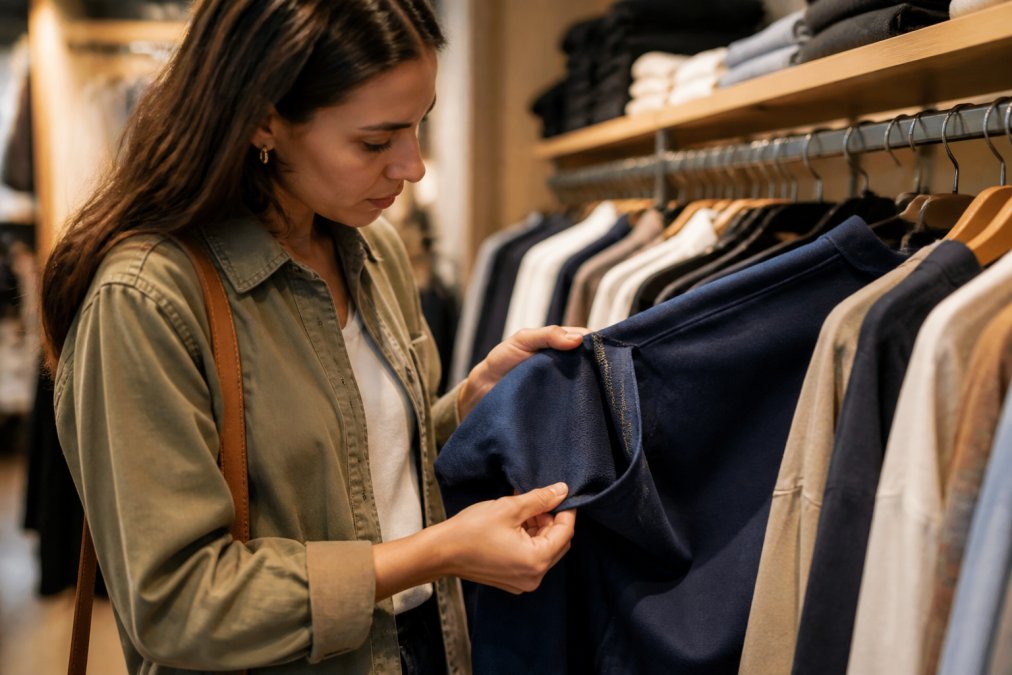
The Fabric Weight and Hand-Feel Test
Fabric weight tells you how substantial a garment is, and you can judge it without a scale. Pick up the item and let it hang, fabric that feels flimsy and see-through in bright light usually won't survive heavy rotation. Hold it up to a light source: if your hand shows clearly through a shirt that isn't meant to be sheer, the weave is thin.
Seams, Stitching, and Hardware Checks
Turn the garment inside out. This is where quality hides.
- Stitch density: Look for tight, even stitches with no gaps. Sparse, loose stitching is the first thing to fail under stress.
- Seam integrity: Give the side seams a gentle tug. If you see light through the stitches, they're too loose.
- High-stress areas: Check the armholes, crotch, and pocket corners, where reinforcement matters most.
- Zipper hardware: Zip it up and down a few times. It should glide without catching or skipping teeth.
- Button attachment: Wiggle each button. A well-sewn button has multiple passes of thread, not a single loose loop.
Durable Fabric Types for Daily Wear
The most durable fabric types for daily wear balance natural fibers with strategic synthetic blends: cotton and wool bring breathability and longevity, while a small percentage of polyester or elastane adds stretch and shape retention. Pure synthetics can work for activewear, but they tend to pill and hold odors over time. Here's a touch test you can run at the rack.
A Touch Test for the Fabrics You'll Actually Buy
Cotton (tees, button-downs, denim)
- Rub a fold between your thumb and fingers. Good cotton has a dry, slightly grippy hand-feel and springs back when you release it. If it feels slick or cool like plastic, synthetic content is high.
- Hold it to the light. A cotton tee that's see-through in normal indoor lighting is woven too thin to survive heavy rotation.
- For denim, pinch the fabric at the thigh. Heavyweight denim feels stiff at first and softens with wear; lightweight denim feels floppy. The stiffer pair usually outlasts the floppy one.
Wool (sweaters, coats, socks)
- Squeeze a section and let go. Quality wool bounces back and holds its shape. If it stays compressed or feels scratchy and brittle, the fibers are short and it will pill quickly.
- Look for a tight, dense knit. If you can see daylight through the body of a sweater, it's loosely knit and prone to snags.
- Merino feels soft and slightly cool; lambswool feels springier and a bit rougher. Both last well when the knit is dense.
Linen (summer shirts, dresses, pants)
- Linen should feel cool, dry, and a little crisp, with visible irregular slubs in the weave, a sign of real linen, not a defect.
- Crumple a corner in your fist. Good linen creases sharply and holds the crease; a linen-blend with heavy synthetic content springs back smooth, which means less breathability.
- Heavier linen (often labeled "heavyweight" or "washed") wrinkles less and wears longer than thin, gauzy linen.
Synthetic blends (activewear, stretch pants, everyday knits)
- Stretch the fabric and release it. It should snap back to shape immediately. If it stays stretched or feels baggy, the elastane is low-quality or already fatigued.
- Rub the surface with your palm. If it immediately pills or feels fuzzy, it will look worn within a few washes.
- For activewear, a polyester-dominant knit with moderate stretch handles repeated washing and movement well. Our Slim Pocket Yoga Track Pants use this kind of knit, which is why they hold up to a real laundry schedule.
Reading the Fiber Label Like a Buyer
Fiber content is listed by percentage, largest first. Patterns worth knowing:

- 100% cotton or 100% wool, usually the most durable and easiest to repair, but expect some shrinkage and wrinkling.
- Cotton/poly blends around 60/40, a good middle ground for everyday tees and work shirts. The cotton keeps it breathable; the poly keeps the shape.
- Small elastane content (2-5%), adds stretch and recovery to pants and activewear without turning the garment into plastic.
- High polyester or rayon content in a "cotton" tee, a red flag. It will feel slick, pill faster, and hold odors.
Natural Fibers vs. Synthetic Blends
Natural fibers like cotton, linen, and wool tend to age gracefully. Cotton gets softer with washing, wool resists odor naturally, and linen grows more comfortable each season. Their downside is shrinkage and wrinkling, which is why blends exist.
Cost-Per-Wear: The Math That Beats Price Tags
Cost-per-wear is the price of a garment divided by the number of times you actually wear it. A $60 pair of pants worn 100 times costs $0.60 per wear. A $20 pair worn eight times before it falls apart costs $2.50 per wear. That single calculation reframes every purchase: durability, not the price tag, determines the real cost.
| Garment | Price | Wears Before Wearing Out | Cost-Per-Wear |
|---|---|---|---|
| Fast-fashion tee | $12 | 10 wears | $1.20 |
| Mid-range cotton tee | $35 | 80 wears | $0.44 |
| Quality wool sweater | $90 | 150 wears | $0.60 |
Laundry Habits That Keep Clothes Going
Laundry care is where most wardrobes quietly fall apart. Heat, agitation, and harsh detergent break down fibers faster than daily wear ever does.
Repair and Refresh Before You Replace
Mending is the habit that separates a wardrobe that lasts from one that churns. A loose button, a small hole, or a split seam rarely means the end of a garment.
Men’s ArcticGuard Fleece-Lined Utility →
Build a Basic Repair Kit
You don't need a sewing machine. A small kit covers almost everything:
- Hand-sewing needles in a couple of sizes
- Thread in black, white, navy, and one color that matches your most-worn garment
- A few spare buttons (save the extras that come attached to new clothes)
- Iron-on patches and a small piece of fusible interfacing
- A seam ripper and small scissors
- A fabric shaver for pilling
How to Reattach a Button (2 Minutes)
- Thread a needle and knot the end.
- Push up through the fabric from underneath, into one hole of the button.
- Lay a toothpick across the top of the button and stitch over it, this creates a small thread shank so the button sits above the fabric and doesn't pull tight.
- Pass through each pair of holes three or four times.
- Remove the toothpick, wrap the thread around the shank a few times, and knot underneath.
That shank is the difference between a button that lasts and one that pops off again in a week.
How to Fix a Split Seam
- Turn the garment inside out.
- Pin the two edges back together along the original seam line.
- Use a backstitch: push the needle up through both layers, then back down behind where you came up, and repeat. Backstitch is far stronger than a running stitch and mimics what a machine does.
- Knot off and trim.
For a seam under real stress, crotch, armhole, pocket corner, stitch twice for extra reinforcement.
How to Darn a Small Hole
Darning works on socks, sweater elbows, and thin knits.
- Slide a small object (a lightbulb, a smooth stone, or a darning egg) under the hole to hold the shape.
- Sew vertical threads across the hole, like a ladder.
- Weave horizontal threads over and under the vertical ones, like a tiny basket weave.
- Knot off on the inside.
The patch won't be invisible, but it will be strong, and on a favorite sweater, that's the point.
Refreshing Pilling, Fading, and Stretched Cuffs
- Pilling: A fabric shaver or fine-tooth comb run gently across the surface restores sweaters and knits in seconds. Work in one direction and don't press hard.
- Faded denim: A cold dye bath (follow the dye package directions) can bring color back to black or indigo jeans. Wash separately for the first few cycles afterward.
- Stretched cuffs and necklines: A brief soak in warm water, then a low-heat tumble or careful reshaping and air-drying, can coax ribbing back toward its original size. It won't be perfect, but it buys months.
- Broken zipper pull: Replacing just the pull (not the whole zipper) is a five-minute fix with small pliers and a replacement pull from a craft store.
When to Let It Go
Not everything is worth saving. Skip the repair if:
- The fabric itself is thin and tearing in multiple places
- The zipper tape is ripped out of the garment (not just the pull)
- The garment has already been repaired twice in the same spot
- It no longer fits and can't be easily altered
In those cases, donate wearable items or recycle textiles through a local program rather than tossing them in the trash.
Secondhand and Thrift Finds: What Lasts
Thrift shopping rewards a trained eye. Because older garments have already been washed and worn, you can spot durability markers that new items hide.
Best Everyday Essentials for Women 2026
The best everyday essentials for women in 2026 lean toward versatile, well-made pieces that earn their place through constant wear. Think high-waisted activewear, quality knits, and layering staples you can dress up or down.
Frequently Asked Questions
What fabric characteristics indicate high-quality clothing?
Look at fiber content and fabric weight first. Denser, heavier fabrics generally resist pilling and thinning better than loose, thin ones. Check stitch density: more stitches per inch along seams and hems signal stronger construction. Feel the fabric hand-feel, hold it up to light to spot thin spots, and inspect zippers and buttons for solid attachment. These cues matter more than brand names or price tags.
How can you tell if a garment will last through multiple washes?
Check the care label and the fabric blend before buying. Natural fibers like cotton and wool hold up well when washed correctly, while some synthetic blends pill faster. Look for reinforced seams, secure buttons, and quality zipper hardware. At home, wash in cold water, turn garments inside out, and air-dry when you can. Following laundry care symbols keeps colorfastness and shape intact far longer.
Why does higher price not always guarantee better clothing durability?
Price often reflects branding, marketing, and retail markups rather than construction. A costly garment can still have loose stitching, thin fabric, or weak zippers. Instead of trusting the tag, inspect seam integrity, stitch density, and fiber content yourself. Cost-per-wear is a better measure: divide the price by how many wears you realistically get. A cheaper piece worn often can beat an expensive one that pills after a month.
How should you care for your clothes to extend their lifespan?
Wash less often, use cold water, and follow the laundry care symbols on each label. Turn garments inside out to protect colorfastness, zip zippers before washing, and skip the dryer for knits and natural fibers to prevent shrinkage. Store folded items flat when possible, and address small issues like loose buttons or minor mending early. These habits add years of wear and support a more sustainable wardrobe.