
Table of Contents
- Why Verifying Wellness Product Ingredient Quality Matters
- How to Read Supplement Labels Like a Pro
- What Third-Party Supplement Testing Actually Confirms
- How to Interpret a Certificate of Analysis (COA)
- FDA Regulation of Dietary Supplements: What It Does and Doesn't Do
- Supply Chain Traceability and Raw Material Sourcing
- Bioavailability Verification: Does Your Body Absorb It?
- Red Flags in Marketing Claims and Ingredient Transparency
- Frequently Asked Questions
Last Updated: October 4, 2026
Why Verifying Wellness Product Ingredient Quality Matters
Learning how to verify wellness product ingredient quality comes down to one habit: reading the evidence, not the marketing.
At Dawterson, we built our wellness shelves around that same idea.
The stakes are real. The FDA has warned that some supplements contain hidden drug ingredients or contaminants (the FDA).
Below, we'll show you exactly how to check any wellness product in about ten minutes.
How to Read Supplement Labels Like a Pro
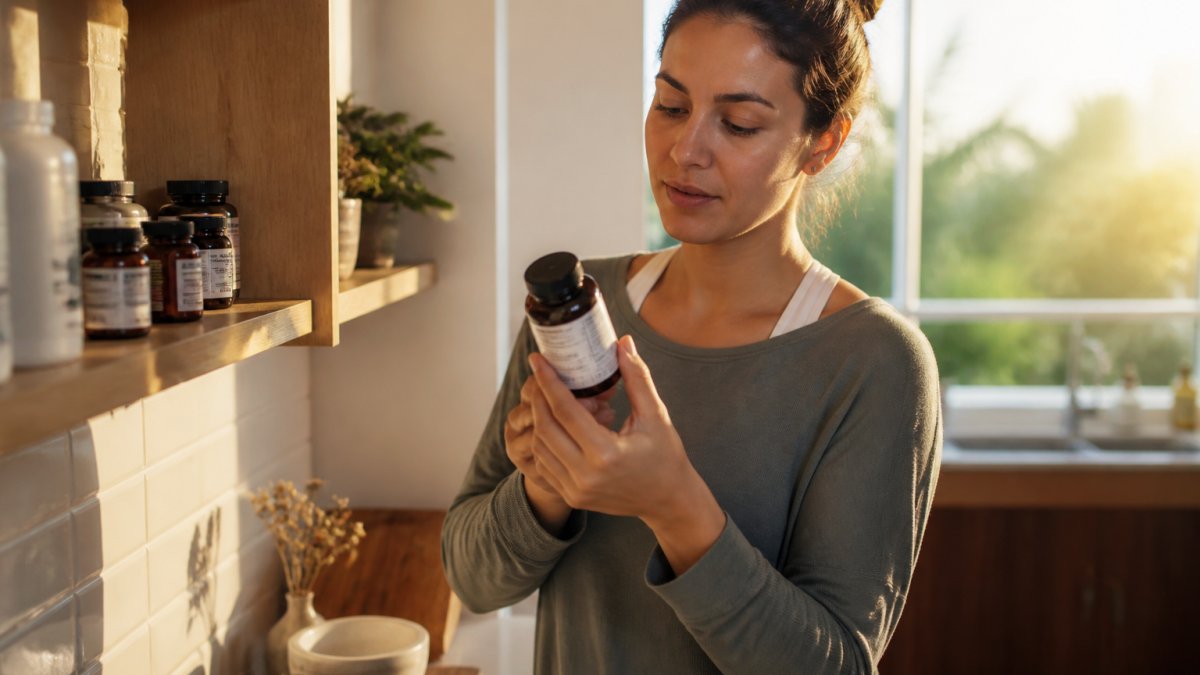
Start with the Supplement Facts panel, then read the "Other Ingredients" line. That order tells you what you're actually getting and what's just filler.
Supplement Facts vs. Other Ingredients
The Supplement Facts panel lists active ingredients and amounts per serving. "Other Ingredients" covers everything else: binders, fillers, flavors, and coatings.
Watch for these common fillers:
- Magnesium stearate
- Silicon dioxide
- Titanium dioxide
None of these are automatically bad. But a long filler list often signals a cheap formula.
Spotting Proprietary Blends and Fillers
A proprietary blend groups ingredients under one total weight. You see the blend amount, not each ingredient's dose.
That's a problem. A blend could be 90% cheap powder and 10% the ingredient you wanted.
If a label hides doses behind a blend, ask the company for a full breakdown. If they won't share one, move on.
What Third-Party Supplement Testing Actually Confirms
Third-party supplement testing is an independent lab check that confirms what's really inside a product. It verifies ingredient identity, potency, and purity, separate from the company selling it.
That independence matters. A company testing its own product is grading its own homework.
Good testing screens for:
- Heavy metals like lead, arsenic, and mercury
- Microbial contamination such as bacteria and mold
- Label accuracy, meaning the dose matches the bottle
Certifications and Seals Worth Trusting
Look for seals from established certifying bodies. These programs audit manufacturing and run their own batch tests.
Common seals include USP, NSF, and ConsumerLab. Each one checks products against set purity standards.
A seal isn't a guarantee of effectiveness. It does mean someone outside the company checked the basics.
How to Interpret a Certificate of Analysis (COA)
A Certificate of Analysis is a lab report showing test results for a specific batch. It lists what was tested, the method used, and whether the batch passed.
Here's what to check on a COA:
| Section | What It Tells You | What to Look For |
|---|---|---|
| Batch number | Which production run was tested | Matches the number on your bottle |
| Test method | How the lab ran the analysis | Named methods, not vague claims |
| Heavy metals | Lead, arsenic, mercury, cadmium levels | Results below set limits |
| Microbial screen | Bacteria, yeast, mold counts | Passing results |
| Potency | Actual ingredient amounts found | Close to the label claim |
| Lab name | Who did the testing | An accredited, independent lab |
If the batch number on the COA doesn't match your bottle, the report proves nothing about your product. That's the detail most shoppers miss.
FDA Regulation of Dietary Supplements: What It Does and Doesn't Do
The FDA treats dietary supplements as a subcategory of food, not as drugs. That single fact explains almost everything about how supplement quality works in this country.
Under the Dietary Supplement Health and Education Act of 1994 (DSHEA), a company can launch a supplement without proving it works or getting pre-market approval (the FDA). The manufacturer is responsible for safety and labeling, but nobody at the agency signs off before the bottle hits the shelf.
So what does the FDA actually do?
- Sets and enforces labeling rules, including the Supplement Facts panel and the disclaimer required on any structure/function claim
- Requires manufacturers to follow current Good Manufacturing Practices (cGMPs) under 21 CFR Part 111, which cover identity testing, potency, and cleanliness
- Bans adulterated or misbranded products, including supplements spiked with prescription drugs
What it doesn't do:
- Test every product for purity before it's sold
- Confirm health claims before a product goes to market
- Guarantee the dose on the label matches what's in the capsule
How to Use FDA Data Yourself
This is the part most guides skip. You can check a product or brand against public FDA records in a few minutes:
- Warning Letters database, search the brand or manufacturer name. A warning letter for cGMP violations, unapproved drug claims, or adulteration is a serious red flag.
- Recalls, Market Withdrawals, and Safety Alerts, see if the product or its parent company has been pulled from shelves.
- Tainted Products Marketed as Dietary Supplements, the FDA maintains a list of products found to contain hidden pharmaceutical ingredients, often in weight-loss, sexual-enhancement, and bodybuilding categories.
- cGMP inspection results, the FDA publishes inspection classifications (NAI, VAI, OAI). An OAI, or Official Action Indicated, means the agency found significant problems.
A brand with a clean record across all four isn't automatically high quality, but a brand with warning letters or recalls is a hard pass.
Cranberry + Probiotic Women’s Wellness Gummies →
Where the Gap Shows Up
Because the FDA polices the market after the fact rather than screening it beforehand, the burden falls on the manufacturer to do the right thing and on you to check. That's exactly why third-party testing and Certificates of Analysis matter so much, they fill the space the FDA doesn't.
Supply Chain Traceability and Raw Material Sourcing
Raw material sourcing is where quality is won or lost. A clean final product starts with clean ingredients, and that starts at the farm or supplier.
Ask three questions about any brand:
- Where do the ingredients come from?
- Can they name the supplier or region?
- Do they test raw materials before production?
Companies with real traceability can answer all three. They know their supply chain from source to bottle.
The FTC's guidance on health claims also requires that advertising claims be truthful and backed by evidence. Vague sourcing stories don't meet that bar.
Bioavailability Verification: Does Your Body Absorb It?
Bioavailability is the share of an ingredient your body actually absorbs and puts to use. A label can list a dose your body never takes in, and most supplement guides never tell you how to check.
This is the gap. Competitors explain the concept and stop. Here's how to actually verify it.
Step 1: Check the Ingredient Form
The same nutrient can absorb very differently depending on its chemical form. A few well-known examples:
- Magnesium, magnesium oxide is cheap but poorly absorbed; magnesium glycinate, citrate, and malate are generally better absorbed and gentler on the stomach.
- Folate, folic acid is synthetic; methylfolate (5-MTHF) is the active form some people absorb more efficiently.
- Vitamin B12, cyanocobalamin is stable and inexpensive; methylcobalamin and adenosylcobalamin are the coenzyme forms.
If a label lists the cheapest form and the marketing copy brags about potency, that's a mismatch worth noticing.
Step 2: Look for Absorption Enhancers
Some formulas include ingredients specifically to improve uptake:
- Piperine (from black pepper) paired with curcumin or other botanicals
- Medium-chain triglycerides (MCTs) or healthy fats in softgels for fat-soluble vitamins like D, E, and K
- Phospholipid delivery systems (often labeled as phytosome or liposomal)
These aren't marketing fluff, they're formulation choices that show the maker thought about absorption, not just label claims.
Step 3: Ask the Brand These Three Questions
- What form of the ingredient do you use, and why? A brand that can explain its form choice is a brand that thought about it.
- Do you have dissolution or absorption data? Dissolution testing shows how quickly a capsule breaks down and releases its contents, a standard part of pharmaceutical quality control that some supplement makers also run.
- Is dissolution data on your Certificate of Analysis? If yes, ask to see it. If no, ask why not.
Most brands won't have great answers. The ones that do are worth your attention.
Step 4: Read the COA for Dissolution and Potency
When you look at a Certificate of Analysis, don't just check heavy metals. Look for:
- Disintegration or dissolution results, did the tablet or capsule break down within the expected time?
- Potency at end of shelf life, not just at manufacture. An ingredient that degrades before you finish the bottle isn't doing you any good.
- Stability data, some labs report accelerated stability results that predict how the product holds up over time.
If a COA only shows heavy metals and microbials, that's a partial picture. It confirms safety, not absorption.
A Practical Shortcut
You don't need a lab coat to make a smart choice. Look for:
- A named, well-absorbed ingredient form on the label
- A delivery format that matches the nutrient (softgels for fat-soluble vitamins, capsules for probiotics, etc.)
- A brand willing to share dissolution or stability data when asked
Our approach at Dawterson is simple: we favor formulas with recognizable ingredients, clear serving directions, and forms chosen for absorption, like our Cranberry + Probiotic Women’s Wellness Gummies, which combine cranberry, a probiotic blend, and vitamin C in an easy daily gummy. If you're building a daily routine, our 20-in-1 Liver Wellness Complex pairs milk thistle extract with a broader botanical blend for adults looking to complement healthy everyday habits with liver-focused nutritional support.


Red Flags in Marketing Claims and Ingredient Transparency
Certain phrases should make you slow down. They usually signal marketing over substance.
Watch for these red flags:
- "Proprietary blend" with no dose breakdown
- Cure-all claims for serious conditions
- No COA or testing info anywhere on the site
One more: a product that promises to treat, cure, or prevent disease. Dietary supplements can't legally make those claims. If you see one, walk away.
At Dawterson, we keep our wellness picks simple: clean ingredient lists, clear directions, and no miracle promises. If you're building a daily routine, our 20-in-1 Liver Wellness Complex pairs milk thistle extract with a broad botanical blend.
Frequently Asked Questions
How can I check if ingredients in my wellness products are toxic?
Start by reading the full label and looking for third-party testing seals like USP, NSF, or ConsumerLab. Check whether the product has a Certificate of Analysis available. Look up individual ingredients in online databases like NIH's Dietary Supplement Label Database. Avoid products with proprietary blends that hide amounts, and be cautious of claims that sound too good. If a product lists heavy metals testing or microbial contamination screening, that's a positive sign of wellness product quality.
What third-party certifications should I look for on wellness labels?
The most recognized seals include USP Verified, NSF Certified, and ConsumerLab Approved. These certifying bodies test for potency, purity, and label accuracy. USP and NSF also inspect manufacturing practices. Look for seals printed directly on the label, not just mentioned on a website. A certificate of analysis from an ISO 17025-accredited lab adds another layer of confidence. No single seal guarantees everything, but they signal that someone outside the brand checked the product.
How do I interpret supplement labels for ingredient quality?
Check that the Supplement Facts panel lists exact amounts per serving, not just a proprietary blend total. Look for standardized extracts, which indicate consistent active ingredients. Scan the Other Ingredients section for unnecessary fillers, artificial colors, or allergens. Verify that the serving size matches what you expect. If the label mentions third-party supplement testing or provides a COA, that supports ingredient transparency. Compare the label against the manufacturer's website to confirm consistency.
What does a Certificate of Analysis tell me about a wellness product?
A Certificate of Analysis (COA) is a lab report showing test results for a specific batch. It typically covers potency testing, heavy metals, microbial contamination, and sometimes chemical composition. Look for the batch number matching your product, the lab's name and accreditation, and test dates. If a COA shows results within specification limits, that supports purity standards and product safety. Brands that publish COAs openly tend to have stronger quality assurance and manufacturing practices.
Reading labels and lab reports takes a few minutes, but it protects you from products that don't deliver. Shop with brands that show their testing and name their sources.
Dawterson curates wellness essentials with clean ingredients and clear labels, backed by a 30-day no-hassle return policy and free shipping on orders $50+. Explore our wellness room and build a routine you can actually trust.