
Table of Contents
- Start With the Supplement Facts Panel
- Why Third-Party Supplement Testing Matters
- Fillers, Excipients, and Additives to Avoid
- Bioavailability: Does Your Body Absorb It?
- Sourcing Ethics and Shelf Stability
- Best Natural Supplements for Energy: What to Look For
- Red Flags in Supplement Marketing
- Frequently Asked Questions
Last Updated: September 21, 2026
Start With the Supplement Facts Panel
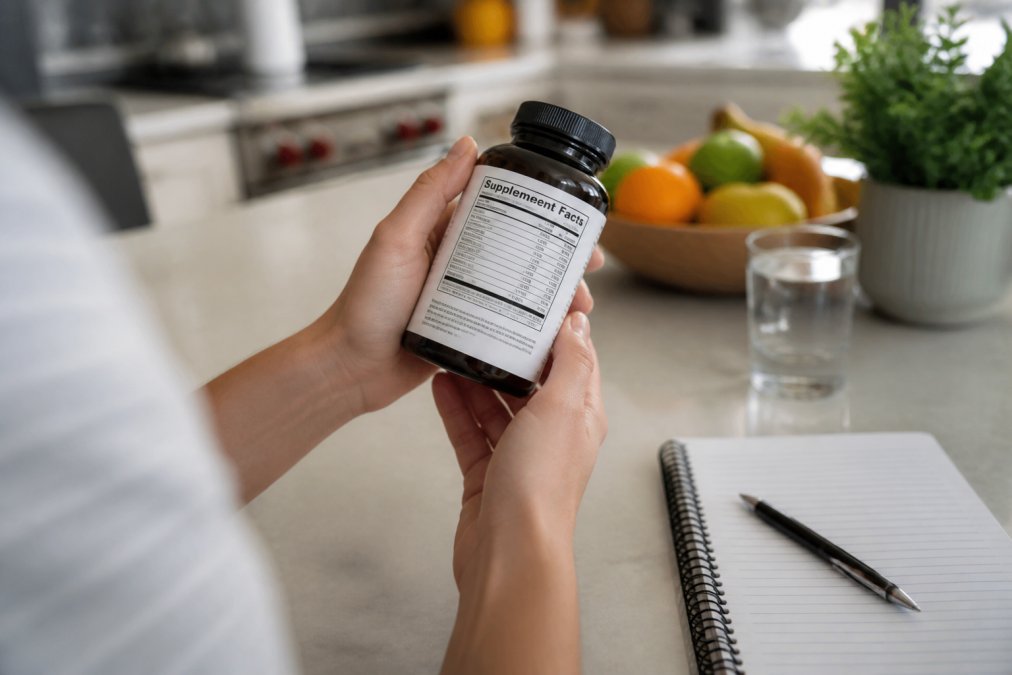
Learning how to identify high quality wellness ingredients starts with one habit: read the Supplement Facts panel before anything else on the bottle. It is the only part of the label regulated with strict formatting rules, and it tells you exactly what is inside each serving.
Serving Size, Potency, and Standardized Extracts
Serving size is where most shoppers get fooled. A bottle may advertise a potent-sounding herb, but if the serving is two capsules and the label lists the herb at a low milligram amount, the headline is doing more work than the formula.
Proprietary Blends and What They Hide
A proprietary blend groups several ingredients under one total milligram weight without disclosing how much of each is included. That lets a maker list an impressive roster while the actual amount of any single ingredient could be tiny.
Why Third-Party Supplement Testing Matters
Third-party supplement testing means sending a finished product to an independent laboratory with no financial stake in the result. That lab checks potency, purity, and contamination, then issues a report, the closest thing to proof a shopper can get without running their own tests.
Certification Seals and Certificates of Analysis
A certificate of analysis, or COA, is the document a laboratory produces after testing a batch. It reports the identity of the ingredient, potency, and results of heavy metal screening and microbial contamination checks.
Fillers, Excipients, and Additives to Avoid
Excipients are the inactive ingredients that hold a tablet or capsule together, and most are harmless in small amounts. The trouble starts when fillers and synthetic carriers make up more of the capsule than the actives do.
Common ones worth scrutinizing:
- Artificial fillers like hydrogenated oils, which add bulk with no nutritional value
- Binders and stearates such as magnesium stearate, used to keep powder flowing in machinery
- Synthetic carriers and artificial colors added for appearance rather than function
Bioavailability: Does Your Body Absorb It?
Bioavailability is the share of an ingredient your body actually absorbs and puts to use rather than passing through. A label can list an impressive dose, but if the form is poorly absorbed, much of it never reaches your bloodstream. It is the most under-covered quality signal in wellness shopping: most guides stop at purity and never ask whether the ingredient can be used at all.
Why Ingredient Form Beats Raw Milligrams
The chemical form of a nutrient decides how well it crosses into the bloodstream. A few examples:
- Magnesium. Magnesium oxide is cheap and dense, but it is poorly absorbed and is used more for its laxative effect. Magnesium citrate and magnesium glycinate are bound to organic carriers the body takes up more efficiently, which is why they cost more per milligram.
- Iron. Ferrous sulfate is widely used and inexpensive, but it is hard on the stomach. Chelated forms like iron bisglycinate bind the mineral to an amino acid, which many people tolerate better and absorb more steadily.
- Folate. Folic acid is the synthetic form; methylfolate is the active form the body can use without a conversion step. People with certain genetic variants convert folic acid poorly, so the active form matters more for them.
- Curcumin. Plain curcumin powder is absorbed poorly on its own. Formulations that pair it with piperine (black pepper extract), or use phospholipid or micellar delivery, exist specifically to raise absorption.
- CoQ10. The ubiquinol form is the reduced, more readily used version; ubiquinone is the oxidized form the body must convert. Oil-based softgels absorb better than dry powder capsules.
Chelated vs. Oxide, and What the Label Tells You
"Chelated" means the mineral is bound to an organic molecule, usually an amino acid, which shields it through digestion and improves uptake. "Oxide" and "carbonate" forms are inorganic, inexpensive, and generally less absorbable. The form usually appears in parentheses after the mineral, such as "Magnesium (as magnesium glycinate)." If the label only says "magnesium" with no form, that is a transparency gap worth noting.
How to Test Absorption Claims Yourself
You cannot run a lab test at home, but you can pressure-test a brand's absorption story:
- Check whether the label names the specific form of each active ingredient.
- Look for a certificate of analysis that reports dissolution or potency, not just identity.
- Be skeptical of "enhanced absorption" language with no form, delivery system, or testing detail behind it.
- Compare cost per absorbable milligram, not cost per milligram, a cheaper oxide form is often the more expensive choice once absorption is factored in.
Sourcing Ethics and Shelf Stability
Ingredient sourcing and shelf stability are the two quality signals shoppers almost never check, and both change what you actually get in the bottle. Most guides focus entirely on the label and ignore where the ingredient came from and how well it survives on your shelf.
What Ethical Sourcing Actually Looks Like
Where a botanical is grown, when it is harvested, and how it is dried all affect the final concentration of active compounds. Signals to look for:
- Named origin. "Wild-harvested ashwagandha root from a specific region" tells you more than "ashwagandha." Origin affects soil quality, contamination risk, and active-compound levels.
- Part of the plant specified. Root, leaf, and seed can have very different compound profiles. A label that names the part is more transparent than one that does not.
- Harvest and drying method. Slow shade-drying preserves delicate compounds better than high-heat drying, which can degrade them.
- Fair-trade or regenerative certifications. These indicate a supply chain that has been audited for labor and environmental practices, not just purity.
- Sustainable wildcrafting claims. For slow-growing botanicals, look for language about replanting or cultivated sources rather than unchecked wild harvest.
How Shelf Stability Affects Potency
Shelf stability is how well a product holds its potency over time. Heat, light, oxygen, and humidity degrade many compounds, and the rate depends on the ingredient:
- Oils and fat-soluble nutrients oxidize when exposed to light and air, which is why quality fish oil and vitamin E come in dark glass or opaque softgels.
- Probiotics are living organisms and lose viability faster than most ingredients; refrigeration and moisture-barrier packaging matter more for them than for anything else on the shelf.
- Delicate botanicals and certain vitamins degrade with heat, so a warehouse or shipping route that gets hot can quietly reduce potency before you ever open the bottle.
- Effervescent and powder formats are sensitive to moisture once opened, which is why desiccant packs and tight seals matter.
A Practical Storage Guide
- Keep products in a cool, dark, dry place, a closed cabinet away from the stove, not a sunny counter or a steamy bathroom.
- Keep the original container and its desiccant pack; transferring to a pill organizer exposes contents to air and light.
- Tighten lids fully after each use, especially for powders and probiotics.
- Refrigerate only when the label says to; unnecessary refrigeration can introduce moisture.
- Check the expiration or best-by date and buy sizes you will finish within that window. Stockpiling a large bottle of a delicate botanical is a common mistake that quietly wastes money.
| What to Check | Why It Matters | Red Flag |
|---|---|---|
| COA with lot number | Confirms batch-specific testing | Generic seal, no batch data |
| Standardized extract | Consistent active compound levels | Vague "herbal blend" |
| Inactive ingredient list | Limits fillers and carriers | Long list of synthetic additives |
| Best-by date | Signals shelf stability | No date printed anywhere |
| Ingredient sourcing notes | Supports ethical, clean supply | No origin information at all |
| Packaging type | Protects against light, air, moisture | Clear plastic, no seal |
Best Natural Supplements for Energy: What to Look For
The best natural supplements for energy share a few traits: transparent labels, standardized actives, and third-party verification. Energy support usually comes from B vitamins, adaptogenic herbs, and minerals used in metabolism, so the form and dose of each decide whether the product is worth taking.
Red Flags in Supplement Marketing
Supplement marketing is where label literacy pays off most. The FTC's guidance on health claims in advertising requires that claims be truthful and not misleading, yet exaggerated language still fills product pages.
Watch for these signals:
- Miracle language promising overnight results
- Cure or treatment claims for a named disease
- A single "secret" ingredient with no dose listed
- Before-and-after photos with no testing data behind them
- No COA, no lot number, and no way to contact the maker
Frequently Asked Questions
What should I look for on a supplement label to ensure quality?
Start with the Supplement Facts panel: check the serving size, the amount per serving, and whether each ingredient is listed individually or hidden inside a proprietary blend. Look for a manufacturer name and address, a lot number, and an expiration date. Then check the label for third-party testing claims or certification seals, and confirm the product lists allergens clearly. A label that names every ingredient at its actual dose, rather than grouping them into a blend, is usually the better sign.
How can I tell if a wellness ingredient is third-party tested?
Look for a certification seal from an independent lab, or a statement that the product is tested for heavy metals, microbial contamination, and potency. Many brands publish a certificate of analysis (COA) on request or on their website. If a brand cannot produce a COA or name the lab that tested the product, treat the quality claim as unverified. Third-party testing means someone other than the seller checked the ingredients, which is the whole point.
Are natural wellness ingredients always better than synthetic ones?
Not always. Natural and synthetic versions of the same vitamin can behave differently in the body, and some synthetic forms are actually absorbed more easily. What matters more is the form of the ingredient, the dose, and whether it has been tested for purity. For example, a standardized botanical extract with a verified potency is often a better choice than a raw plant powder with no testing, even though both are 'natural.' Judge the ingredient by its form and testing, not its origin story.
What are the signs of low-quality wellness ingredients?
Common red flags include vague proprietary blends that hide individual doses, artificial fillers and synthetic carriers like stearates or titanium dioxide, no third-party testing claim, no lot number or expiration date, and marketing that promises dramatic results without evidence. Extreme claims, missing allergen labeling, and prices that seem too low for the listed ingredients are also warning signs. If a label is hard to read or the brand will not share a certificate of analysis, move on.
Sorting genuine quality from clever packaging takes a system, not a hunch. Dawterson curates wellness essentials with clean, effective ingredients and clear labeling, from our Saffron Mood & Mind Wellness Complex to everyday finds across our rotating rooms. Build your box with Dawterson and shop wellness products you can actually read the label on.
