
Table of Contents
- Why Verifying Supplement Ingredient Purity Matters
- Step 1: Read and Interpret the Supplement Label
- Step 2: Understand Third-Party Tested Supplements
- Step 3: Review the Supplement Certificate of Analysis
- Step 4: Look for USP Verified Supplements
- Step 5: Check for NSF Certified Dietary Supplements
- Step 6: Contact the Manufacturer When in Doubt
- Common Mistakes to Avoid When Verifying Purity
- Frequently Asked Questions
Last Updated: October 11, 2026
Why Verifying Supplement Ingredient Purity Matters
When you pick up a supplement bottle, you're trusting that what's inside matches what's on the label. But how do you actually know?
We're breaking down exactly how to verify supplement ingredient purity so you can make confident choices about what you're putting in your body.
The FDA doesn't pre-approve dietary supplements the way it does medicines. Third-party testing, certification marks, and certificates of analysis are your best tools for confirming that a supplement actually contains what it claims.
Step 1: Read and Interpret the Supplement Label
Start with what's right in front of you. The label tells you everything you need to know to begin your verification process.
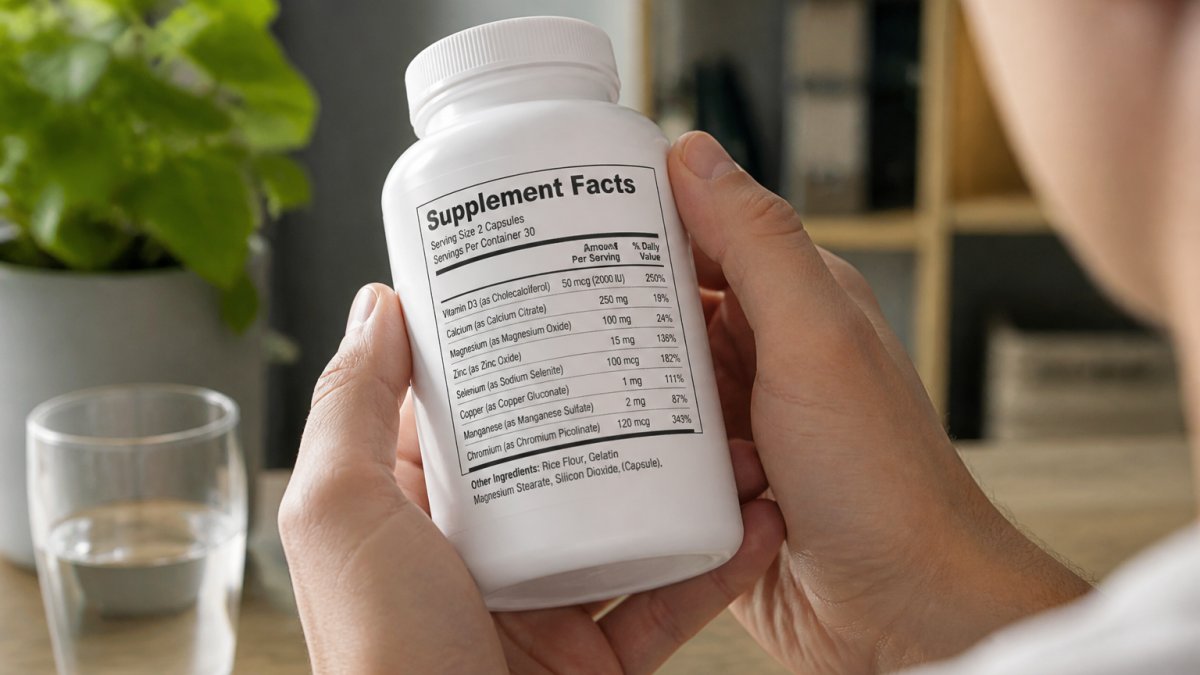
Check the ingredient list and amounts
Look for the Supplement Facts panel, which lists every ingredient and its amount per serving. Check the listed ingredients, serving size, and dose amounts. For example, our Cranberry + Probiotic Women's Wellness Gummies clearly lists cranberry, probiotics, and vitamin C so you know exactly what you're getting.

Look for the Supplement Facts panel
If a brand uses vague language like "proprietary blend" without listing individual ingredient amounts, you can't verify purity. Reputable brands break down every component.
Step 2: Understand Third-Party Tested Supplements
Third-party testing is one of the most reliable ways to verify supplement ingredient purity. When an independent lab tests a supplement, they're checking that what's on the label actually matches what's in the bottle. But "third-party tested" is a broad claim, and understanding what testing actually proves, and what it doesn't, is key.
What third-party testing can actually verify
Third-party labs typically test for:
- Identity: Does the supplement contain the ingredients listed on the label? Labs confirm the ingredient is what it claims to be, not a substitute.
- Purity: Are there unwanted contaminants? Labs screen for heavy metals, bacteria, mold, pesticide residues, and undeclared ingredients.
- Potency: Is the amount of active ingredient what the label claims? A supplement might contain the right ingredient but at half the stated dose.
What third-party testing cannot prove
A passing test result does NOT mean:
- The supplement is safe for you personally. Testing confirms purity, not safety for your individual health status, medications, or allergies.
- The supplement will work. Purity testing verifies the ingredient is present and uncontaminated, not whether it produces the claimed health benefit.
- The product is safe long-term. A certificate shows the product at one point in time, not how it behaves over months or years.
How testing scope varies by supplement type
Different supplements carry different contamination risks, and testing should reflect that:
Herbal supplements (turmeric, ashwagandha, ginseng) should be tested for identity, heavy metals, pesticides, and microbial contamination.
Mineral supplements (zinc, magnesium, iron) should be tested for identity, potency, and heavy metals.
Probiotic supplements should be tested for strain identity, live culture viability, and contaminating microbes. Note: A CoA showing "live cultures present" is only valid if tested shortly before purchase.
Vitamin supplements (vitamin D, B vitamins) should be tested for identity and potency.
Omega-3 and fish oil supplements should be tested for identity, potency, heavy metals, and oxidation markers.
The difference between in-house testing and true third-party testing
This distinction matters more than many people realize:
- In-house testing: The manufacturer tests their own product. This is better than no testing, but it's not independent.
- Third-party testing: An independent lab with no financial stake in the product tests it. This is more reliable.
- Certified third-party testing: The lab itself is certified by NSF, USP, or ConsumerLab, adding another layer of oversight.
When you see "third-party tested" on a label, verify that the testing was done by a lab that is truly independent and ideally certified.
How to spot the testing mark
Look for these marks on the bottle or packaging:
- USP Verified mark: Indicates the product passed USP's testing for identity, strength, quality, and purity.
- NSF Certified for Dietary Supplements mark: Indicates the product passed NSF's testing for listed ingredients, contaminants, and manufacturing practices.
- ConsumerLab seal: Indicates the product passed ConsumerLab's independent testing.
These marks tell you the product has passed independent testing. If you see one, you can usually visit the organization's website to verify the specific product and see the test results or a summary.
What "batch tested" means and why it matters
Some brands claim "batch tested," meaning each production batch is tested before it's sold. If a brand claims batch testing, ask for a certificate of analysis for your specific batch number. If they can't provide one, the claim is less meaningful.
Step 3: Review the Supplement Certificate of Analysis
A certificate of analysis (CoA) is a detailed report from a testing lab showing what a specific batch was tested for and the results. But a certificate only helps if you know how to read it.
Cranberry + Probiotic Women’s Wellness Gummies →
What a certificate of analysis actually shows
When you request or find a CoA, you'll typically see:
- Product name and manufacturer: Confirms you're looking at the right supplement
- Batch or lot number: The specific production run tested, critical, because batches can vary
- Test date: When the analysis was performed
What a certificate of analysis does NOT show
This is just as important:
- Long-term safety data: A CoA confirms what's in the bottle now, not whether it's safe long-term
- Whether the supplement works: Testing confirms identity and purity, not effectiveness
- Interactions with your medications: That's between you and your doctor
How to match the certificate to your specific bottle
This step is critical and often overlooked. A certificate for a different batch is not proof your bottle is pure.
- Find the batch or lot number on your bottle's label and locate that same number on the certificate. If they don't match, the certificate doesn't apply to your purchase.
- Check the test date. If more than a year old, ask the manufacturer if a newer test exists.
- Scan the ingredients tested. Does the certificate cover the active ingredients you care about?
- Review the results. Look for "pass," "compliant," or "within limits." If you see "fail" or "exceeds limits," do not buy the product.
- Note the detection limits. A limit of 10 ppm is less sensitive than 1 ppm. Lower limits mean the lab can catch smaller amounts of contamination.
Understanding common testing methods and what they catch
Different contaminants require different tests:
- Heavy metals: Tested via ICP-MS. Detection limits typically range from 0.1 to 10 ppm.
- Bacteria and mold: Tested via microbial culture or PCR. Results shown as colony-forming units (CFU) per gram.
- Pesticide residues: Tested via chromatography. Limits set by the EPA.
Red flags on a certificate of analysis
- Batch number doesn't match your bottle: The certificate doesn't apply to what you bought.
- Test date is more than 18 months old: Manufacturing conditions may have changed.
- Only a few ingredients tested, not the main active ones: You're not getting a complete picture.
- Detection limits are unusually high: The lab may not be sensitive enough to catch low-level contamination.
Where to find certificates of analysis
Reputable manufacturers make CoAs easy to access via their product page, QR codes on labels, or by contacting the manufacturer with your batch number. If a manufacturer refuses to provide a certificate, choose a different brand.
Step 4: Look for USP Verified Supplements
USP (United States Pharmacopeia) Verified is one of the most recognized certification marks in the supplement industry. According to USP's supplement verification standards, USP Verified supplements have been tested for identity, strength, quality, and purity.
To find USP Verified products:
- Check the bottle for the USP Verified mark
- Visit the USP website and search their verified product database
- Look for the product name, manufacturer, and lot number
USP Verified products meet strict manufacturing standards and have passed independent testing. This mark is a strong signal that ingredient purity has been verified.
Step 5: Check for NSF Certified Dietary Supplements
NSF International offers another trusted certification. NSF Certified supplements have been tested for listed ingredients, contaminants, and manufacturing practices. Look for the NSF Certified mark on the label or search their certified product database.
Step 6: Contact the Manufacturer When in Doubt
If you can't find third-party testing information or certification marks, reach out to the manufacturer and ask: Has your product been third-party tested? Can you provide a certificate of analysis for my specific batch? Do you follow Good Manufacturing Practices? Reputable manufacturers are happy to answer. If a brand is evasive, look elsewhere.
Common Mistakes to Avoid When Verifying Purity
Assuming a supplement is safe because it's natural. Natural doesn't mean pure or safe.
Ignoring batch numbers. A certificate is only relevant if it matches your specific batch.
Skipping the ingredient list. You can't verify purity if you don't know what you're looking for.
Buying based on price alone. Quality verification costs money, and that's reflected in the price.
When shopping for wellness products, choose brands that invest in transparency. At Dawterson, we curate supplements with quality ingredients and clear labeling, like our Chili Pepper Vascular Wellness Complex and 20-in-1 Liver Wellness Complex.


| Verification Method | What It Checks | How to Find It |
|---|---|---|
| Supplement Facts panel | Listed ingredients and amounts | On the bottle label |
| Third-party testing mark | Identity, purity, potency | Bottle or packaging |
| Certificate of analysis | Detailed test results for your batch | Manufacturer's website or request |
| USP Verified database | Product registration and testing | usp.org product search |
| NSF Certified database | Certification status and standards | nsf.org product search |
Verifying supplement ingredient purity doesn't have to be complicated. According to FDA guidance on dietary supplement compliance, informed consumers who ask questions drive the market toward higher standards.
At Dawterson, we believe you deserve to know exactly what you're buying.
Frequently Asked Questions
How can I verify the authenticity of a supplement?
Start by checking the label for the manufacturer's name and contact information, then look for third-party testing marks like NSF or USP. Request a certificate of analysis from the company if it's not provided on their website. You can also verify certifications directly on the certifier's database. If something feels off, contact the manufacturer directly, legitimate companies are transparent about their testing and sourcing.
What does third-party testing verify in a dietary supplement?
Third-party testing verifies that the ingredients listed on the label are actually present in the amounts claimed, checks for harmful contaminants like heavy metals and pesticides, and confirms the product is free from undeclared substances. However, third-party testing does not guarantee that a supplement will work as intended or that it's safe for everyone, it confirms identity, purity, and potency only. Always consult a healthcare professional about whether a supplement is right for you.
Can a certificate of analysis prove that a supplement is pure?
A certificate of analysis shows that a specific batch was tested for identity, strength, and contaminants at the time of testing. It doesn't prove the finished product you bought matches that batch or that testing covered every possible contaminant. Always verify the batch number on your product matches the certificate, and understand that certificates show what was tested for, not everything that could be present. It's one tool, not a complete guarantee.
Is NSF or USP better for supplement verification?
Both NSF Certified and USP Verified supplements meet rigorous standards for identity, strength, and purity. NSF focuses on contamination testing and manufacturing practices, while USP verifies ingredient identity and potency. Neither is inherently 'better', both indicate a high level of third-party verification. Choose based on what matters most to you: NSF if contamination is your priority, USP if ingredient accuracy is key. Either mark is a strong sign of quality.