
Table of Contents
- Why Everyday Jewelry Deserves a Spot in Your Routine
- Quick Comparison: Our Favorite Everyday Pieces
- How to Tell If Jewelry Is Good Quality Before You Buy
- Hypoallergenic Jewelry for Sensitive Ears: What to Look For
- What Makes the Best Online Stores for Fashion Jewelry Stand Out
- Styling Your Everyday Jewelry: Layering, Sizing, and Capsule Tips
- Caring for Your Jewelry So It Lasts
- Conclusion: Building a Collection You'll Actually Wear
- Frequently Asked Questions
Last Updated: October 7, 2026
Why Everyday Jewelry Deserves a Spot in Your Routine
The right everyday jewelry does more than finish an outfit. It becomes part of how you feel when you walk out the door. At Dawterson, we've noticed that the pieces people reach for daily are rarely the fanciest ones.
That's the goal when you purchase stylish everyday jewelry online: finding pieces you'll actually wear on a Tuesday, not just save for a special occasion.
A common mistake is buying a statement piece first and building around it. In practice, it works the other way. Start with simple, versatile staples, then add personality.
Quick Comparison: Our Favorite Everyday Pieces
Here's a snapshot of the Dawterson pieces we reach for most, organized by what they're good at rather than by price alone.
| Piece | Best For | Material Notes | Why It Works Daily |
|---|---|---|---|
| Tricolor Twist Necklace & Bracelet Set | Mixed-metal lovers | Stainless steel, tri-color twist | Two matching pieces, warm and cool tones |
| Endless Grace 4-Piece Bracelet Set | Stacking and layering | Silver-tone mesh chain, adjustable | Four looks from one set |
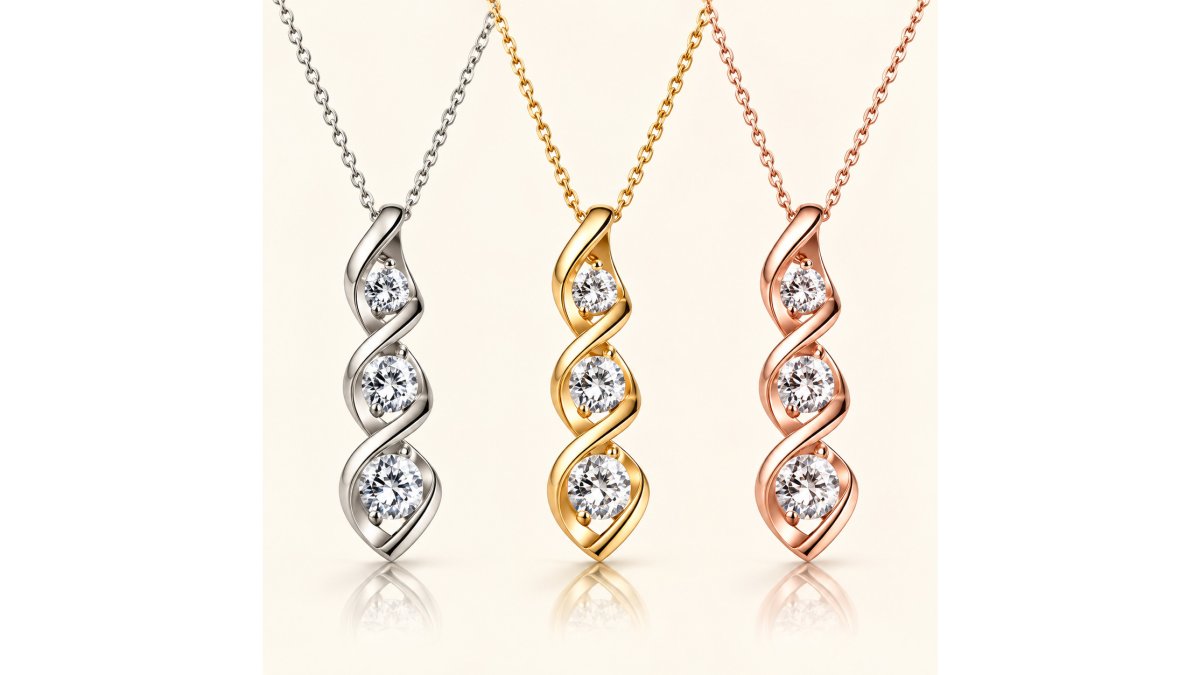
| Twilight Spiral Crystal Pendant Necklace | Simple shine | Zirconia-style stones, three finishes | Clean line, easy to match |
| Three-Tone Heart Charm Bracelet | Gifting and mixing metals | Three-tone with heart charms | Pairs with jewelry you already own |
| Butterfly Confetti Hoop Earrings | Adding personality | Gold-tone with mixed-color stones | Playful without being loud |
If you're building a capsule collection from scratch, start with the Tricolor Twist set. It covers your neck and wrist in one purchase and works with both warm and cool tones.

How to Tell If Jewelry Is Good Quality Before You Buy
Quality shows up in two places: the materials and how the piece is put together. You can judge both from a product page if you know what to look for. Here's the short version before we get into details.

Materials That Hold Up to Daily Wear
What most guides miss is that "gold-tone" and "gold-plated" aren't the same thing. Gold-tone describes the color and finish, not a solid gold content.
A quick way to compare: look for a stamp or hallmark. Sterling silver is usually marked "925" or "sterling." Solid gold is marked with a karat number like "14K" or "18K." If a listing shows no stamp and no base-metal name, that's your answer.
Construction Details That Signal Durability
Look for these before you add to cart:
- Reinforced clasps. Lobster clasps outlast cheap spring rings.
- Adjustable extension chains. They let you fine-tune fit, which reduces strain on the clasp.
- Smooth, sealed edges. Rough edges catch on fabric and snag hair.
A quick test: check the product photos for close-ups of the clasp and the back of the pendant. If a store won't show you those angles, that tells you something.
Reading a Product Page Like a Buyer, Not a Browser
Most product pages give you enough to make a smart call if you know where to look. Here's a short checklist:
- Base metal named? Look for "sterling silver," "stainless steel," or a specific alloy, not just "silver-tone."
- Plating thickness listed? If it just says "gold-plated," assume it's thin.
- Stone type stated? "Zirconia-style" and "cubic zirconia" are different claims. Know which one you're reading.
At Dawterson, we list specs for every piece, including approximate lengths and materials, so you can compare before you buy. We also offer 30-day no-hassle returns, which matters more with jewelry than almost any other category.
When you purchase stylish everyday jewelry online, you're trusting a photo. A store that makes returns easy is admitting that photos aren't perfect. That's a good sign.
Hypoallergenic Jewelry for Sensitive Ears: What to Look For
Hypoallergenic jewelry is made from materials less likely to trigger a reaction, usually by avoiding nickel and other common irritants. If your ears itch, turn red, or feel hot after wearing earrings, the metal is often the cause.
Nickel is the most common culprit. It shows up in a lot of inexpensive fashion jewelry because it's cheap and durable. The fix is straightforward: look for nickel-free pieces, and pay attention to what touches your skin.
Materials generally considered gentler on sensitive skin:
Gold-tone and plated pieces can still work for sensitive ears if the base metal is nickel-free and the plating is intact.
What Makes the Best Online Stores for Fashion Jewelry Stand Out
The best online stores for fashion jewelry do three things well: they describe materials honestly, they photograph pieces accurately, and they make returns simple.
Here's what separates a store worth buying from from one you'll regret:
- Clear material specs. Base metal, plating thickness, and stone type should be listed.
- Real product photos. Multiple angles, including close-ups of hardware.
- Measurements in plain terms. Chain length, pendant size, and weight.
- A straightforward return policy. You should be able to send something back without a fight.
At Dawterson, we list specs for every piece, including approximate lengths and materials, so you can compare before you buy.
When you purchase stylish everyday jewelry online, you're trusting a photo. A store that makes returns easy is admitting that photos aren't perfect.
Styling Your Everyday Jewelry: Layering, Sizing, and Capsule Tips
Layering works when there's a clear hierarchy. Without one, you get a tangle. The good news is that a simple ratio solves most of it.
Butterfly Confetti Hoop Earrings →
The 2:1:1 Rule for Balanced Layering
Use two delicate pieces, one medium piece, and one statement piece. That's the whole framework.
The delicate pieces sit closest to your neck. The statement piece, like our Butterfly Confetti Hoop Earrings, draws the eye and anchors the look.

For mixed metals, the Tricolor Twist Necklace & Bracelet Set does the coordinating for you. The gold, silver, and rose tones mean you don't have to match anything.
Getting the Fit Right: Necklace and Bracelet Sizing
Fit is the most overlooked part of buying jewelry online. A necklace that's too short sits wrong all day.
- Choker: 14 to 16 inches, sits at the base of the neck (Necklaces)
- Princess: 17 to 19 inches, the most common everyday length
- Matinee: 20 to 24 inches, falls below the collarbone
- Opera: 28 to 36 inches, meant for layering or doubling
For bracelets, measure your wrist and add about half an inch for a comfortable fit. Most of our bracelets include extension chains, which gives you room to adjust. The Three-Tone Heart Charm Bracelet measures about 7.87 inches around, so it fits most wrists with a little room to move.
Building a Capsule That Matches Your Actual Week
A capsule collection works best when it maps to what you actually wear, not to a Pinterest board. Start by counting the outfits you repeat most, usually work, weekend, and one or two dressier occasions.
For each, pick one anchor piece:
- Work: A simple pendant or small hoops that won't catch on a keyboard or headset.
- Weekend: A stack of bracelets or a charm piece that feels a little more relaxed.
- Dressier: One statement piece, earrings or a pendant, and keep everything else quiet.
Three anchors, worn in rotation, cover most of your week. Add a fourth piece only when you notice a gap, like a necklace that works with a specific neckline you wear often.
Occasion Styling Without Overthinking It
The same piece can shift from desk to dinner with one small change:
- Office: Keep metals consistent and pieces close to the body. A single pendant and small studs read as polished without being loud.
- Weekend errands: Layer two delicate chains and add a bracelet stack. The Tricolor Twist set handles the mixed-metal look in one step.
- Dinner or event: Swap small studs for the Butterfly Confetti Hoop Earrings and let them do the work. Skip the necklace if the earrings are the focus.
- Gifting: If you're buying for someone else, a mixed-metal set is the safest bet because it works with whatever they already own.
Caring for Your Jewelry So It Lasts
Care is simple, and it's the difference between a piece you wear for a year and one you wear for five.
A routine that works:
- Put jewelry on last, after perfume and lotion have dried
- Take it off before showering, swimming, or exercising
- Wipe each piece with a soft dry cloth after wearing
- Store pieces separately so they don't scratch each other
For sterling silver that has tarnished, a polishing cloth usually restores the shine. For plated and gold-tone pieces, skip the polishing cloth and stick to a dry wipe.
If a clasp feels loose or a stone starts to shift, deal with it early. Small repairs are cheap. Replacing a lost pendant is not.
Conclusion: Building a Collection You'll Actually Wear
The hardest part of building an everyday collection isn't finding pieces you like. It's finding pieces you'll still reach for six months from now.
Start with two or three versatile staples, then add personality once you know what you actually wear.
Explore the Dawterson jewelry collection to find pieces that fit your daily routine. With 30-day no-hassle returns and free shipping on orders over $50, trying something new is low-risk.
Frequently Asked Questions
How can you tell if online jewelry is good quality?
Look at the material details first. Listings that name specific materials like stainless steel, sterling silver, or gold vermeil give you more to go on than vague terms like 'gold-tone' alone. Check the construction notes too: secure clasps, even stone settings, and smooth finishes all point to better craftsmanship. Read the care instructions, since pieces that come with specific guidance tend to be made with more attention. Finally, look for a clear return policy so you can inspect the piece in person without risk.
What jewelry is comfortable enough to wear every day?
Lightweight pieces with smooth edges tend to be the most comfortable for daily wear. Hoop earrings under 3 cm, delicate pendant necklaces on adjustable chains, and stretch or adjustable bracelets all work well. Avoid heavy statement pieces or anything with rough edges that could catch on clothing. If you have sensitive ears, look for nickel-free or hypoallergenic options. The best everyday jewelry is the piece you forget you're wearing until someone compliments it.
How do I choose hypoallergenic jewelry for sensitive ears?
Start by checking what the earring posts and backs are made of. Nickel-free options are a good choice. Stainless steel, sterling silver, and gold vermeil over a safe base metal all tend to work well for sensitive ears. Avoid unknown metal blends, especially in cheaper fashion jewelry. If a listing doesn't specify the post material, that's a sign to keep looking. When in doubt, start with one pair and wear them for a few hours before committing to more.
What is the 2:1:1 rule in jewelry layering?
The 2:1:1 rule is a simple styling guideline for layering necklaces. It means combining two pieces of one length, one piece of a second length, and one piece of a third length. This creates visual balance without tangling. The rule works for bracelets too: two delicate, one medium, one bold. Mix textures and finishes within the ratio to keep it interesting.
How do I know what necklace length works for my everyday style?
Measure your neck circumference first. For everyday wear, adjustable chains in the 17 to 19 inch range work for most people. If you're layering, start with a shorter chain as your base and build outward. A piece that sits just below the collarbone tends to flatter most necklines and outfit styles.