
Table of Contents
- Why Compression Leggings Help After a Long Shift
- How Compression Leggings for Circulation Work
- Reading mmHg: What Compression Level Actually Means
- Compression Leggings for Standing All Day: Matching Support to Your Shift
- Compression Leggings Fit and Sizing: Getting It Right the First Time
- How Long to Wear Compression Leggings (and When to Take Them Off)
- Safe Use: Who Should Check With a Doctor First
- Dawterson Picks for Recovery Wear
- Frequently Asked Questions
Last Updated: October 5, 2026
Why Compression Leggings Help After a Long Shift
If you spend eight, ten, or twelve hours on your feet, you know the feeling: aching legs, puffy ankles, heavy calves.
At Dawterson, we hear from nurses, teachers, retail workers, and warehouse teams who want everyday comfort without a complicated routine. This guide is for you.
So why do they help?
Below, we break down how compression works, what the numbers on the label mean, how to pick the right level for your shift, and how long to wear them.
How Compression Leggings for Circulation Work
When you stand still for hours, your calf muscles are not pumping much. Blood and fluid can settle in your lower legs.
Compression leggings support your veins so blood keeps moving, and many people find their legs feel lighter and less swollen by day's end.
A common mistake is buying the tightest pair you can find. Too much pressure can cut off flow and cause pain, the right fit matters more than the strongest squeeze.
Reading mmHg: What Compression Level Actually Means
mmHg stands for millimeters of mercury, the unit used to measure compression pressure on leggings and socks.
Here is how the levels usually break down:
| Level | Typical mmHg | Best For | How It Feels |
|---|---|---|---|
| Mild | 8-15 mmHg | Tired legs, travel, light standing | Light, easy to wear all day |
| Moderate | 15-20 mmHg | Long shifts, prolonged standing | Noticeable but comfortable |
| Firm | 20-30 mmHg | Swelling, doctor-recommended use | Strong; often needs a fitting |
| Medical | 30-40 mmHg | Venous conditions, post-surgery | Prescription-level support |
For most people who stand all day, mild to moderate is the sweet spot, support without feeling like a tourniquet.
One thing most guides miss: the mmHg number on the label refers to the pressure at the ankle, not the whole leg.
If you have a health condition like venous insufficiency or varicose veins, talk to your doctor before choosing a level.
Compression Leggings for Standing All Day: Matching Support to Your Shift
Most guides treat every long workday the same. But a twelve-hour nursing shift, a warehouse picker walking ten miles, and a desk worker who stands two hours and sits for six are three different problems for your legs. The right pair depends on what your shift does to your circulation.
Start with what your legs are doing, not just how long you work
- Standing still for hours (retail counter, surgery, assembly line): Your calf muscles are not pumping much, so fluid pools. Moderate support, roughly 15-20 mmHg at the ankle, tends to feel right for a full shift.
- Walking most of the shift (nursing, warehouse, food service): Your calf muscles are already pumping, so you may not need as much squeeze. Mild to moderate, around 10-15 mmHg, is easier to keep on for ten or twelve hours.
- Sitting most of the day with short standing bursts (desk, driving, front desk): Pressure can build behind the knee when you sit. Look for a soft, non-binding back-of-knee panel and mild compression, 8-15 mmHg.
Shift length changes the math
- 4-6 hours: Mild, 8-15 mmHg. Easy to forget you are wearing them.
- 8 hours: Moderate, 15-20 mmHg. A good default for a full day on your feet.
- 10-12 hours: Moderate, 15-20 mmHg, with a short mid-shift break if you can. Stronger is not automatically better, the longer you wear a garment, the more fit and breathability matter.
Heat, humidity, and fabric choice
A hot kitchen, stuffy warehouse, or summer shift outdoors changes what you can tolerate. In heat, breathability matters more than compression level. Look for moisture-wicking fabric and consider a cropped or lighter-weight pair, a pair you keep on all shift beats a stronger pair you peel off by lunch.
A quick way to test your match
Put your pair on before your shift. About two hours in, ask yourself:
- Are my legs feeling lighter than usual, or the same?
- Is anything pinching, rolling, or bunching?
- Would I forget I am wearing these?
If your legs feel supported and you are not thinking about the garment, you matched well. If you are tugging at the waistband or your toes tingle, the level or fit is off.
Compression Leggings Fit and Sizing: Getting It Right the First Time
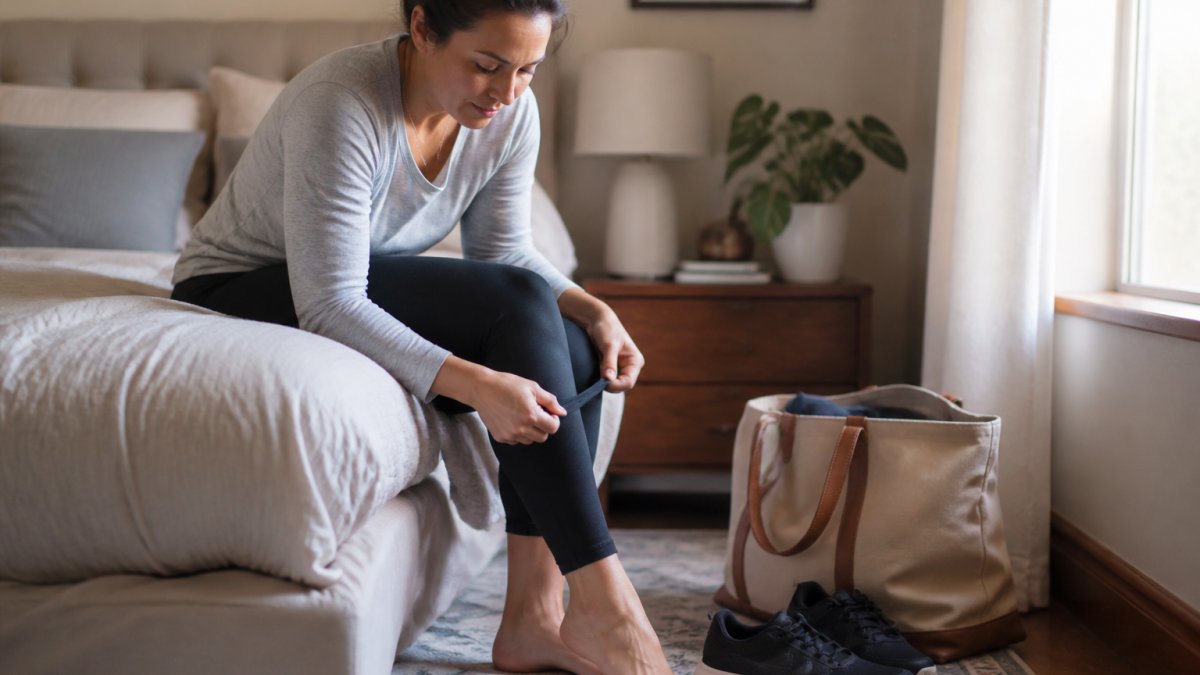
Fit is where most people get compression wrong: too loose does nothing, too tight can hurt. Measure your ankle and calf before you buy, the widest part of your calf and the narrowest part of your ankle, and match those numbers to the brand's size chart, not your usual pants size.
A few things to look for:
- Snug, not painful. You should feel steady pressure, not pinching.
- No bunching. Fabric that bunches behind the knee can rub and cause sore spots.
- Full coverage. Full-length support works well for all-day wear. Cropped pairs suit warmer days.
Waistbands, Slipping, and Tummy Comfort
A bad waistband ruins an otherwise good pair. If it rolls down or digs in, you will spend the whole shift tugging at it.
Look for a wide, flat waistband that sits high and stays put; high-waisted designs stay in place better and feel kinder on your tummy. If a pair leaves deep red marks or slips down every time you bend, the size or cut is wrong.
How Long to Wear Compression Leggings (and When to Take Them Off)
Post-activity wear is where recovery benefits show up.
A simple rule: wear them while you are on your feet and for a little while after. Then let your legs rest.
Do not sleep in them unless a doctor tells you to.
Slim Pocket Yoga Track Pants →
Washing matters too. Follow the washing instructions on the label, most pairs last longer hand washed or on a gentle cycle, skipping the dryer.
Safe Use: Who Should Check With a Doctor First
Compression leggings are safe for most healthy people, but they are not right for everyone, especially if you have a health condition that affects your circulation.
Why some conditions change the picture
Compression pushes fluid and blood upward through your veins. For most people that is helpful, but if your circulation, arteries, or skin are already compromised, added pressure can do more harm than good.
Talk to a doctor before wearing compression leggings if you:
- Have venous insufficiency, varicose veins, or a history of blood clots. Your doctor can tell you whether compression helps, and at what level.
- Have peripheral artery disease (PAD) or other arterial circulation problems. In some cases, compression can reduce blood flow to the feet.
- Have heart conditions or fluid retention related to heart or kidney issues.
This is not meant to scare you. It is meant to keep you safe. A quick check with your doctor takes a few minutes and can save you a lot of trouble.
Warning signs to watch for during wear
A well-fitted pair feels snug and supportive, never painful. Take them off and check the fit if you notice:
- Numbness, tingling, or a pins-and-needles feeling in your toes or feet
- Color changes, toes turning pale, blue, or unusually red
- Pain that gets worse the longer you wear them
If any of these happen, take the leggings off, elevate your legs if you can, and check with a doctor before wearing them again.
Snug versus too tight: how to tell the difference
A common mistake is buying the tightest pair you can squeeze into. Too much pressure can cut off flow and cause pain.
- Snug feels like steady, even pressure. You can still bend your knees, wiggle your toes, and walk normally.
- Too tight feels like pinching, throbbing, or a band cutting into your skin. Your toes may tingle or change color.
If you are unsure, start with mild compression and see how your legs feel. If anything feels wrong, stop and ask.
A note on medical-grade versus everyday compression
Medical-grade garments, usually 20-30 mmHg and up, are often fitted by a professional and may be prescribed for a specific condition. Everyday activewear with a supportive, high-waisted fit is a different product. It can feel good and help with that heavy-leg feeling, but it is not a treatment. If you need firm or medical-level compression, talk to your doctor about a fitted garment rather than guessing from a size chart.
Dawterson Picks for Recovery Wear
We built our activewear range with everyday comfort in mind.
Our top pick: Solid-Color High-Waisted Yoga Pants.

Best for warmer days: High-Waisted Pocket Yoga Pants.

Best for all-day wear: Slim Pocket Yoga Track Pants.

Best as a set: Women's Yoga Top and Pants Set.
One fit note: our supplier sizing may run smaller than typical U.S. sizing.
A quick word on what these are and are not: comfortable activewear pants with a high-waisted, supportive fit.
Frequently Asked Questions
How long is too long to wear compression leggings?
For most people, wearing compression leggings through a full work shift, roughly 8 to 12 hours, is fine as long as they fit correctly and feel comfortable. The trouble signs are numbness, tingling, throbbing, or deep red marks that last after you take them off. If any of those show up, remove the leggings and give your legs a break. Many people also prefer to wear them for an hour or two after activity rather than around the clock. If you have a health condition affecting your circulation, ask your doctor how long is safe for you.
Can compression leggings help with tired legs after a long shift?
They can help you feel better, especially if you spend hours standing. Graduated compression leggings squeeze the ankle and calf more than the thigh, which supports venous return and can reduce swelling and that heavy, achy feeling by the end of the day. Think of them as one tool in your recovery routine. If your legs stay swollen or painful even with compression, that is worth a conversation with a doctor rather than a bigger pair of leggings.
How should compression leggings fit?
They should feel snug and even, like a firm hug, not pinching or painful. The ankle should have the most pressure, easing as it moves up the leg. You should be able to slide a finger under the waistband, and the fabric should not roll down or bunch behind the knee. Measure your ankle, calf, and thigh, then compare against the brand's size chart instead of guessing from your regular pants size. If you are between sizes, sizing up is usually the safer call, and a pair that leaves deep grooves or numbness is too tight.
Should you sleep in compression leggings?
Usually no, unless a doctor specifically tells you to. Compression leggings are designed for daytime wear when you are upright and your legs are working against gravity. Overnight, most people do not need that level of support, and wearing them for too many hours can cause skin irritation or discomfort. If you want overnight leg support for a medical reason, that is a conversation with your doctor, who may recommend a different garment made for sleep. For everyday recovery, take them off before bed and let your legs rest.
Long shifts take a toll on your legs, and finding the right pair should not be a chore. At Dawterson, we focus on everyday pieces that feel good and fit real life, backed by easy browsing and a 30-day no-hassle return policy. Explore our activewear and wellness rooms to find comfort that works as hard as you do. Build your box and see what fits your day best.