
Table of Contents
- Comparison Table: Best Waist Belts for Back Support
- How to Choose the Right Back Support Belt
- Back Support Belt vs Back Brace: What's the Difference?
- How to Wear a Back Support Belt Correctly
- How Long Should You Wear a Back Support Belt?
- Top Picks: Waist Belts for Back Support
- Conclusion
- Frequently Asked Questions
Last Updated: September 30, 2026
Comparison Table: Best Waist Belts for Back Support
Shopping for the best waist belts for back support starts with knowing what each style actually does. At Dawterson, we hear from customers every week who want everyday comfort without a medical-grade price tag or a bulky fit under their clothes.
Here's the honest breakdown of what we carry and who each belt suits.
| Belt | Best For | Material | Sizes | Price |
|---|---|---|---|---|
| Everyday Training Waist Support Belt | Workouts, walking, running | Spandex | One size | $19.99 |
| FlexFit Workout Waist Belt | Gym, yoga, training | Nylon & spandex | S to 5XL | $24.99 |
| Breathable 3-Piece Maternity Support Belt | Pregnancy, lower-back support | Polyester | M to XXL | $29.99 |
| Adjustable Maternity Belly Support Belt | Daily wear during pregnancy | Polyester | L, XL | $24.99 |
| Adjustable Posture Support Brace | Posture awareness, desk work | Spandex | Multiple sizes | $19.99 |
| High-Visibility Running Waist Pack | Hands-free carry on runs | Water-resistant fabric | Adjustable | $9.99 |
A quick note before you scroll: none of these are medical devices. They're apparel designed for general support and comfort, which is exactly how we describe them on every product page.

How to Choose the Right Back Support Belt
Choosing well comes down to four things: what you'll be doing while you wear it, how long you'll wear it, how it fits your specific body, and how easy it is to keep clean. Most guides stop at the first two. We think the last two matter just as much, because a belt that fits poorly or gets funky after a week is a belt you'll stop wearing.
Start with the activity. A belt for the gym needs stretch and airflow. A belt for pregnancy needs adjustability as your shape changes. A posture brace needs to sit across the shoulders and upper back, not the hips.
Then check the size range. A one-size stretch belt works for many people, but if you're between sizes or want a more personalized fit, a sized option with a wider range usually feels better. When in doubt, size up, you can always tighten a belt that's slightly loose, but you can't stretch one that's too small.
Then read the material list. Spandex moves with you. Nylon blends hold their shape. Polyester stays light and breathable for longer wear.
Finally, think about upkeep.
Materials, Breathability, and Fit
Breathable mesh and moisture-wicking fabrics matter more than most shoppers expect.
Look for breathable mesh panels or lightweight polyester if you plan to wear your belt for hours. For workouts, a spandex or nylon-spandex blend gives you flexibility without trapping heat. For all-day desk wear, a thinner profile under clothing usually beats a thicker, more structured panel.
Fit follows a simple rule: snug, never tight. You should be able to slide a finger under the edge. If the belt leaves red marks or pins your ribs when you breathe, size up.
Finding the Right Fit for Your Body Shape
This is the part most buying guides skip, and it's where we hear the most frustration from customers.
If you're petite or have a shorter torso, a standard-width belt can ride up into your ribs or down onto your hips. Look for a narrower back panel or a belt with a lower-profile closure. A belt that sits too high won't support your lower back no matter how tight you pull it.
If you're plus-size or have a longer torso, a one-size stretch belt may not reach around comfortably, and a narrow panel may not cover enough of your lower back to feel supportive.
A Quick Word on Cleaning and Care
A support belt sits against your skin and collects sweat, so it needs occasional cleaning. Most fabric belts can be hand-washed in cool water with a mild detergent, then air-dried flat. Skip the dryer, heat breaks down elastic and warps the hook-and-loop closure.
Everyday Training Waist Support Belt →

Back Support Belt vs Back Brace: What's the Difference?
A back support belt is a flexible garment that wraps the waist or lower back for everyday comfort during movement. If you're managing a diagnosed condition, talk to your doctor or physical therapist first. If you want gentle support while lifting, walking, or sitting at a desk, a belt is the practical choice.
How to Wear a Back Support Belt Correctly
Position the belt low and centered, with the widest part covering your lower back and the closure at the front. Tighten until it feels supportive, then loosen one notch.
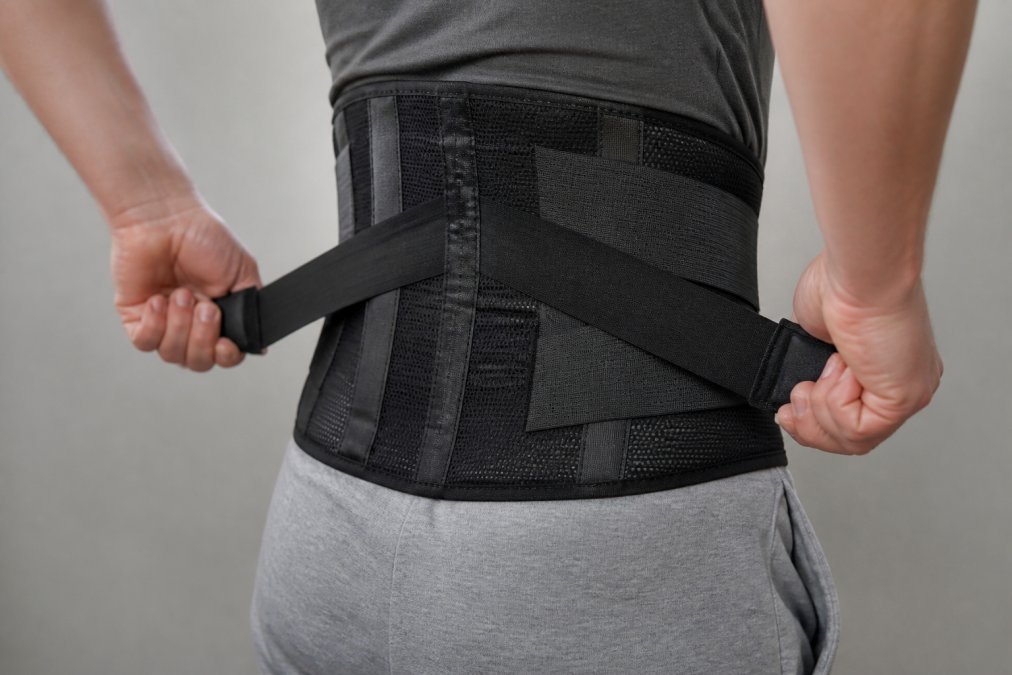
Here's the sequence that works:
- Put the belt on over a thin layer of clothing to prevent chafing
- Center the back panel over your lower back
- Fasten the closure at the front
- Adjust the dual-pull straps evenly on both sides
- Check that you can breathe deeply and bend slightly
- Re-adjust after ten minutes of movement
How Long Should You Wear a Back Support Belt?
Most people wear a support belt for one to three hours at a time, during the activity that needs it, then take it off. Use it for the job, then let your body handle the rest.
A Sensible Wear Schedule
Think of a belt the way you'd think of a knee sleeve or a pair of work gloves, helpful when the task calls for it, unnecessary the rest of the time.
- Lifting or moving heavy items: wear it for the duration of the task, then remove it.
- Long walks or standing shifts: one to three hours at a stretch is a common pattern. Take it off during breaks.
- Desk work: a posture brace can be worn in shorter sessions, many people find 30 to 60 minutes at a time is enough to serve as a reminder, then they take it off and try to hold the position on their own.
- Pregnancy: follow your healthcare provider's guidance, since needs change trimester to trimester.
- Flare-up days: a belt can help you get through a rough day, but it isn't a substitute for addressing the underlying issue.
Pairing a Belt With Movement, Not Instead of It
Here's the angle we wish more guides covered: a belt works best as a temporary aid alongside gentle movement and strengthening, not as a replacement for it.
When to Take It Off for Good
A belt has done its job when you notice you're reaching for it less.
Top Picks: Waist Belts for Back Support
Our most versatile pick is the Everyday Training Waist Support Belt. The spandex construction stretches with you, it comes in five colors, and the one-size fit keeps ordering simple. It's built for running, walking, squats, and general training.
Conclusion
Back support is one of those everyday needs that's easy to put off until something aches. The right belt won't fix a medical condition, but it can make lifting, walking, and long workdays noticeably more comfortable.
Frequently Asked Questions
What is the best waist belt for back pain?
The best waist belt for back pain depends on your needs. For general fitness and everyday support, the Everyday Training Waist Support Belt ($19.99) offers flexible, lightweight compression. If you need a more adjustable fit, the FlexFit Workout Waist Belt ($24.99) comes in sizes S through 5XL. For posture support, the Adjustable Posture Support Brace ($19.99) encourages upright alignment. Always choose a belt that fits snugly without restricting movement.
Does a waist belt help with back pain?
A waist belt can help with back pain by providing compression and support to the lower back and abdomen. This can reduce strain on muscles and improve posture during activities like lifting or prolonged standing. However, belts are not a cure for underlying conditions. They work best alongside physical therapy and proper body mechanics. If pain persists, consult a healthcare professional.
Do doctors recommend back support belts?
Doctors may recommend back support belts for short-term use during activities that strain the back, such as heavy lifting or recovery from a mild injury. They are not typically recommended for long-term wear because prolonged use can weaken core muscles. Always follow advice from your healthcare provider, and use a belt as part of a broader plan that includes exercise and ergonomic adjustments.
What kind of belts can help with lower back pain?
Belts that help with lower back pain include lumbar support belts, sacroiliac joint belts, and posture braces. Lumbar belts provide compression and stabilization for the lower spine. Sacroiliac belts target the pelvic area. Posture braces like the Adjustable Posture Support Brace encourage better alignment. Look for breathable materials and adjustable straps for comfort. Dawterson offers several options, including the Everyday Training Waist Support Belt and the FlexFit Workout Waist Belt.
How do I choose the right size for a back support belt?
To choose the right size, measure your waist or lower abdomen at the point where the belt will sit. Compare your measurement to the product's size chart. For example, the Breathable 3-Piece Maternity Support Belt comes in sizes M through XXL with specific centimeter ranges. If you're between sizes, size up for more adjustability. A properly sized belt should feel snug but not restrict breathing or movement. Adjustable designs can accommodate slight size variations.